English
 Español
 Deutsch
Industry News

(86-579)8507 2566
Welcome to Zhejiang Weiya Cosmetics Co., Ltd.





Welcome to Zhejiang Weiya Cosmetics Co., Ltd.
Jul 03, 2026
You open your makeup bag and realize half the products you bought are barely touched, while the one shade you love is worn completely down. Or maybe you are standing in a store trying to decide whether to buy a full kit or piece together your routine from separate items, and neither option feels obviously right. The tension between convenience and flexibility is real, and it comes up for almost everyone who wears makeup with any regularity. An All In One Makeup Palette Kit promises to simplify the whole process, but individual products offer something it cannot always match. Understanding what each approach actually delivers, and where each falls short, is what makes the comparison genuinely useful rather than just a list of pros and cons.
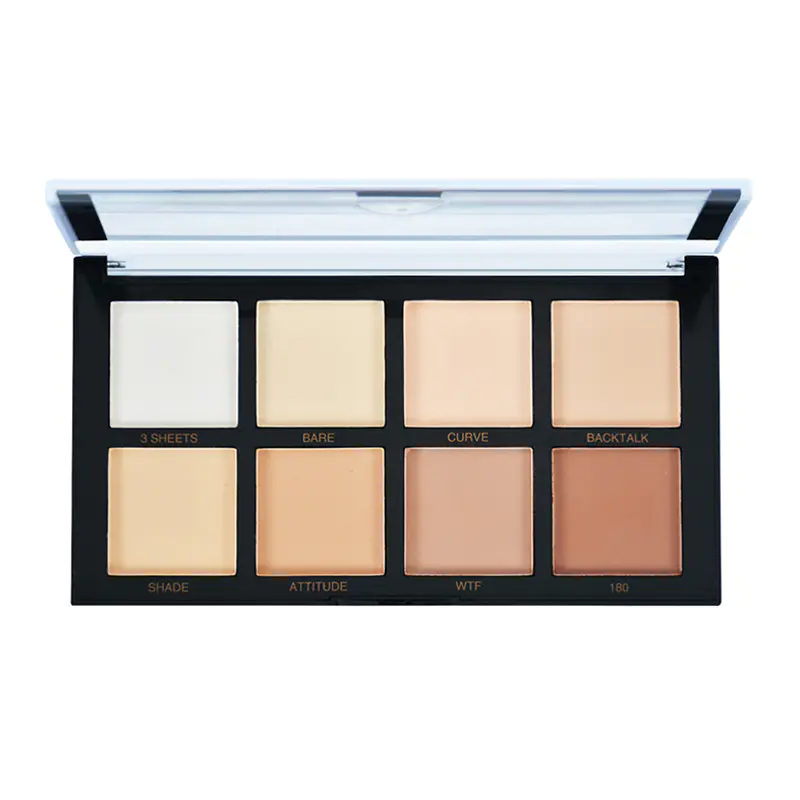
An all-in-one makeup palette typically bundles several product categories into a single compact unit. The exact contents vary by product, but a well-designed kit generally includes eyeshadow shades in a coordinated range, blush or bronzer, a highlighting shade, and sometimes a contour or lip color option.
The appeal is immediately clear. Everything needed for a complete face is in one place, pre-selected to work together, and contained in a single item that takes up a fraction of the space that the equivalent collection of individual products would require.
What palette kits typically contain:
The curation is part of the value. Someone who does not want to spend time researching which blush works with which eyeshadow gets that decision made for them by the palette's design.
Buying individual products means selecting each item separately based on personal preference, skin tone, and specific needs. A single blush purchased independently can be chosen in exactly the right shade for a given skin tone. An eyeshadow can be selected for its texture, finish, or pigmentation independently of anything else in the routine.
Individual items commonly purchased separately:
The flexibility is real. But so is the complexity. Building a complete makeup collection from individual pieces requires more knowledge, more time, and a larger upfront investment spread across many separate purchases.
One aspect of the palette comparison that does not get enough attention is time. Not just the time spent applying makeup, but the time spent thinking about makeup. Which products to buy. Whether they work together. What order to use them in. Whether the combination will produce a wearable result.
A coordinated kit removes most of those decisions. The shades are chosen to work together. The application order is usually implied by the product arrangement. Someone running through a morning routine with limited time available benefits from this structure more than they might initially realize.
The time savings show up in a few specific situations:
For someone whose morning allows five to ten minutes for makeup, the streamlined decision-making of a palette kit matters in a practical way, not just as a theoretical advantage.
For experienced users with an established routine, individual products can be just as fast or faster, because the muscle memory of using a specific product consistently is well-developed. Reaching for a known blush and knowing exactly how to apply it takes no deliberation.
But building to that point takes time and experimentation. And when individual products run out at different rates, replacing them introduces new decisions repeatedly. A palette kit sidesteps that entirely by containing all components in a single unit where running low is visible across the whole product at once.
The immediate comparison often favors individual products as more cost-conscious because the buyer pays only for what they need. But this framing misses something important about how makeup gets used in practice.
With individual products:
With a palette kit:
Neither approach is universally more economical. The more useful question is which pattern matches the actual purchasing and use behavior of the person making the decision.
In a gifting or retail context, the all-in-one format carries a distinct advantage that individual product collections cannot easily replicate. A single kit presents as a complete, curated offering. It photographs well, packages simply, and communicates clear value to the recipient.
Individual products assembled as a gift require more curation effort, more packaging, and more knowledge of the recipient's specific preferences. A well-designed palette kit works around all of that.
For someone with developed preferences and specific skin concerns, individual products offer control that a palette cannot. A person who has identified their exact foundation shade, their preferred blush texture, and the specific eyeshadow formulation that works with their eye shape has a reason to buy each of those things independently.
Areas where individual products deliver meaningfully more control:
Professional makeup artists work almost exclusively with individual products for exactly these reasons. The specific needs of a client or a particular look require ingredients that a curated kit was not designed to provide.
Usually, yes, at least in the short term. And the investment is ongoing rather than a single purchase decision. For users who genuinely use and enjoy that level of customization, the cost is justified. For users who buy individual products out of habit or aspiration but do not actually engage with the flexibility they offer, the cost is harder to defend.
Anyone who has reorganized a makeup bag for a short trip knows the mental load of deciding which products are essential, which can be left behind, and how to fit everything into a toiletry kit with limited space. A palette kit sidesteps the editing process. One item covers eye, cheek, and sometimes lip, which frees up significant space and eliminates the decision about what to bring.
Practical travel advantages:
For frequent travelers or anyone whose makeup routine changes significantly when away from home, the portability argument for a palette is genuine.
The limitation surfaces when a specific product is needed that the palette does not include. A particular coverage foundation. A precise lip shade. An eyeshadow finish not represented in the kit. In those cases, individual products need to come along anyway, which reduces the space-saving advantage.
The palette works cleanly as a travel solution when the user is genuinely willing to work within its contents. When it becomes a supplement to other individual products rather than a replacement for them, its portability advantage shrinks.
The comparison looks different depending on where someone is in their makeup journey.
| User Profile | Likely Better Fit | Why |
|---|---|---|
| Complete Beginner | Palette kit | Pre-coordinated shades reduce error and complexity |
| Casual Everyday User | Palette kit or hybrid | Speed and simplicity suit low-maintenance routines |
| Developing Enthusiast | Mixture of both | Balances learning with exploration and flexibility |
| Experienced Personal User | Individual products | Established preferences require specificity and control |
| Professional Makeup Artist | Individual products | Client-specific needs demand full customization |
| Gift Buyer | Palette kit | Single, cohesive product with clear perceived value |
| Frequent Traveler | Palette kit | Compact and efficient for portability |
| Complex Skin Tone Matching Needs | Individual products | Requires precise shade selection and customization |
A notable shift in beauty culture has moved away from elaborate layered routines toward cleaner, lighter looks that use fewer products applied with more intention. This trend, sometimes called capsule beauty or minimal makeup, actually favors a palette approach in some respects. Fewer products, more coordination, a focused look achieved with what is on hand.
For someone whose goal is a consistent, polished result with minimal effort, a palette kit aligns naturally with that aesthetic. The self-editing that the format imposes is not a limitation in this context. It is a feature.
Individual products, in this framing, make more sense for the user who wants simplicity in application but specificity in selection. A small, carefully chosen collection of individual items that all serve a clear purpose reflects the same philosophy in a different format.
An all-in-one kit contains products that will be used at different rates. Eyeshadow shades used daily will deplete faster than shades used occasionally. The blush or highlighter may last significantly longer than the most popular eye shades. Eventually, the kit reaches a point where some compartments are empty while others still have considerable product remaining.
At that stage, the options are to replace the whole kit, continue using what remains, or supplement with individual products. None of those is a clean outcome compared to the simplicity of the original purchase. This is a genuine limitation of the format that buyers should account for before committing.
Individual products, by contrast, can be replaced independently as each one runs out. A blush repurchase does not require buying a new foundation. The granularity of replacement is a functional advantage for users whose products deplete at very different rates.
For buyers sourcing makeup products for retail distribution, gift sets, subscription boxes, or promotional packaging, the palette format offers advantages that go beyond the individual user experience.
Commercial sourcing advantages of palette kits:
Individual products remain relevant in professional supply, salon, and specialty retail contexts where end users have specific, detailed requirements. In those channels, the flexibility argument translates directly into buyer preference.
Understanding which context applies shapes the sourcing decision more than any general preference for one format over the other.
The palette versus individual products question ultimately depends on who the end user is and what they actually need from their makeup routine. Both formats serve genuine purposes. Both have limitations worth knowing about before purchasing. The decision that holds up over time is the one made with a clear understanding of the actual use scenario rather than an assumption about which format is inherently more practical.
Zhejiang Weiya Cosmetics Co., Ltd. manufactures a range of makeup palette kits and individual cosmetic products across multiple formulations and configurations suited to retail, gifting, and professional supply channels. For buyers evaluating product formats, comparing palette configurations, or planning a sourcing program for a specific market segment, their team can provide product samples, formulation details, and packaging options aligned with the intended application. If you are working through a product development decision or looking to expand your cosmetics range, reaching out with your target user profile and distribution context gives their team the information needed to suggest relevant options rather than a standard catalog response.
Your email address will not be published. Required fields are marked *