English
 Español
 Deutsch
Industry News

(86-579)8507 2566
Welcome to Zhejiang Weiya Cosmetics Co., Ltd.





Welcome to Zhejiang Weiya Cosmetics Co., Ltd.
Oct 01, 2026
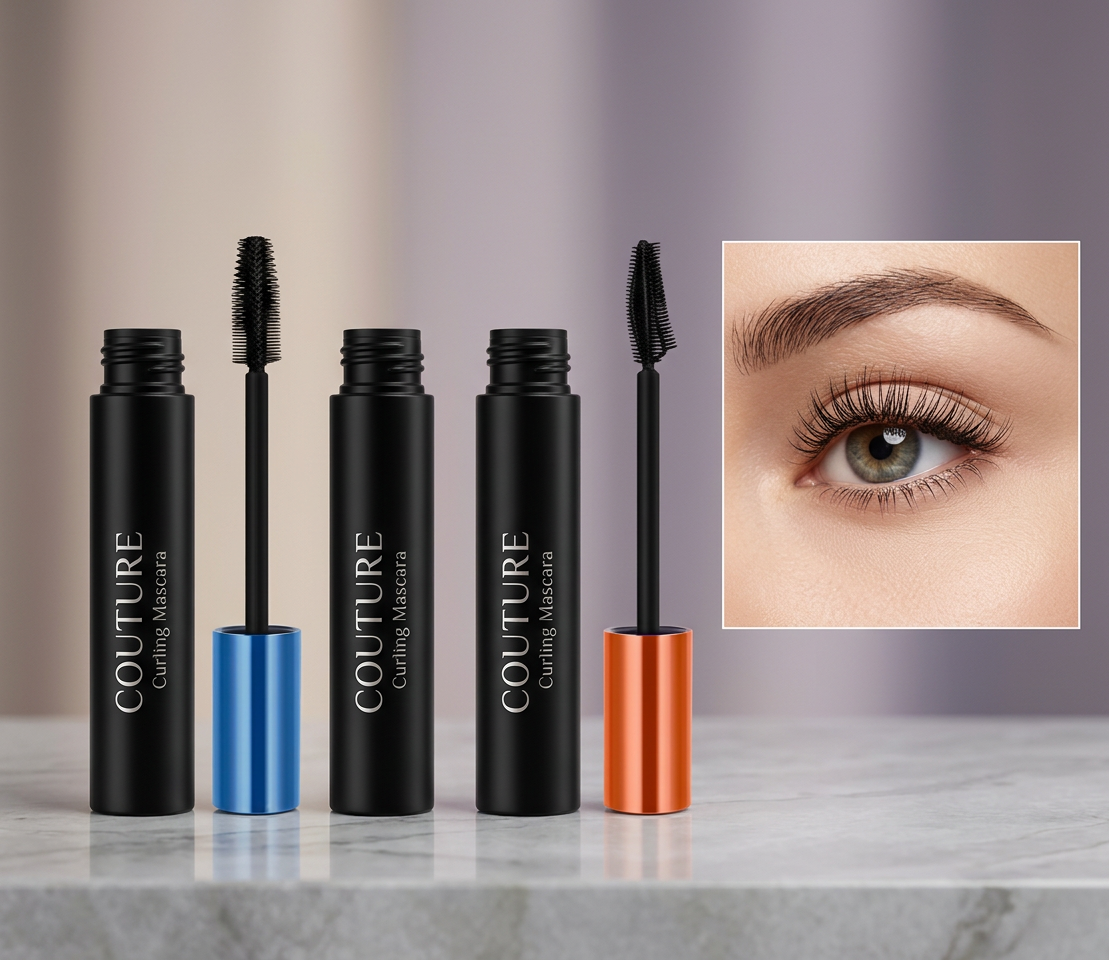
For lashes that look lifted in the morning but straighter by afternoon, mascara is only part of the equation. Lash shape, residual skincare, brush design, formula weight, and application technique all affect the result. Curling mascara is developed to coat and define lashes while helping preserve the curve created during application—but claims such as 24-hour wear, waterproof, and sweat-proof should be supported by testing of the finished product.
For brands developing eye makeup, the goal is to balance curl support with separation, comfortable wear, and a finish users can apply consistently. VEYA Cosmetics provides full-category makeup OEM/ODM services, including eye makeup formula, brush, and packaging development.
Curling mascara is an eye makeup product designed to make lashes appear lifted, curved, and defined. Unlike a mascara developed primarily for dense volume, it must add visible color without coating lashes so heavily that they lose their shape.
The finished effect depends on several parts working together:
A formula that provides shape support without excessive weight
A brush that reaches the lash roots and separates individual lashes
Controlled product pickup from the tube and wiper
Film-forming ingredients selected for the intended wear properties
An application technique suited to the wearer's natural lashes
A glossy black finish can strengthen lash definition for everyday makeup. Volume, length, curl, and wear resistance should each be evaluated separately: a formula that excels at one will not necessarily deliver all four to the same degree.
When curl drops, the cause may be the lashes, the mascara, or the products and conditions around the eyes.
Straight or downward-facing lashes may need a mechanical curl before mascara application. Fine lashes can also lose their shape when coated with a heavy formula.
Eye cream, sunscreen, foundation, and natural skin oil can transfer onto lashes or the area beneath them. This may affect how evenly mascara coats the lashes and whether it transfers during wear.
Moisture and heat can challenge a mascara's wear performance. How much they affect curl or smudging depends on the finished formula, application, and individual wear conditions.
A wet, thick application can add enough weight to pull lashes downward. More product does not always produce a more lifted look.
When lashes stick together, the result can look less defined and feel heavier. Excess formula on the wand or repeated strokes in one area may contribute to clumping.
Applying another coat while the first is very wet can overload lashes. Waiting until it is partly set may make layering easier; waiting until it is completely hard can make additional brushing less comfortable or cause clumps. The best timing depends on the formula.
This routine gives curling mascara the best opportunity to perform, though no application method can guarantee an all-day curl for every lash type and environment.
1. Start with Clean, Dry Lashes
Check for skincare or makeup residue on the lashes. Gently remove visible residue and allow the lashes to dry before applying mascara.
2. Curl Lashes with an Eyelash Curler First
Use a clean eyelash curler before mascara, applying gentle pressure rather than pulling. Avoid using a standard curler on mascara-coated lashes, which may stick to the tool or break.
3. Wipe Excess Mascara from the Wand
Use the tube's wiper to control pickup. If the brush still holds a large amount of formula, remove the excess carefully at the opening rather than repeatedly pumping the wand, which can introduce air into the tube.
4. Apply from Roots to Tips in a Zigzag Motion
Start near the lash roots and move upward with a small side-to-side motion. Focus on even coating and separation rather than pressing the brush against the eye.
5. Coat Inner, Outer, and Lower Lashes Carefully
Use the brush tip or a lighter touch for harder-to-reach lashes. Lower lashes often need less product to avoid a heavy look or transfer beneath the eyes.
6. Let the First Coat Dry Before Reapplying
Allow the first coat to partly set before adding another, following the behavior of the specific formula. Brush through gently while lashes are still workable.
7. Avoid Over-Layering
One or two controlled coats may give a cleaner daily result than several thick layers. Stop when the desired definition is reached and lashes remain separated.
A curling mascara has to balance shape retention with application feel. Strong hold alone is not enough if the formula becomes brittle, clumps, or is difficult to remove.
Curl lock describes how well the finished mascara helps maintain a lifted appearance over time. A claim such as “up to 24-hour wear” should be used only for a specific finished formula after suitable claim-substantiation testing. Results can vary with lash type and wear conditions.
A sweat-proof mascara concept is relevant to warm-weather and active routines. Product teams should define what “sweat-proof” means for their market and assess the finished product under appropriate conditions.
Waterproof refers to resistance to water exposure; smudge-proof concerns unwanted transfer around the eyes. These are related but distinct performance claims. Both require evaluation, including how the mascara wears with skincare and base makeup.
Brush design, formula viscosity, and tube-wiper fit influence whether a mascara separates lashes while adding visible fullness and length. "Clump-free" should describe the result of the tested formula and applicator used together.
Pigment dispersion and film appearance affect the depth and evenness of a glossy black finish. Product evaluation should include the look of the first coat as well as layered application.
Care-oriented ingredients can contribute to the formula's feel and product story. "Nourishing" should not be presented as a lash-growth or medical claim. Comfort and suitability around the eyes depend on the complete formulation, not the presence of a few highlighted ingredients.
Ingredient information is most useful when it accurately reflects the final approved formula. The following ingredients may support a nourishing mascara formula concept, but their inclusion and labeling should be confirmed against the finished product's ingredient list.
Ricinus Communis Seed Oil, or castor seed oil, is used in cosmetics as a conditioning ingredient. Its presence in mascara does not establish that the product stimulates lash growth.
Simmondsia Chinensis Seed Oil, or jojoba seed oil, may contribute to the formula's conditioning feel. Its performance depends on its level and the complete formula.
Vitamin E may be included as part of an antioxidant-focused formulation approach. The precise ingredient name and function should follow the materials used in the approved formula.
Squalane is used in cosmetic products for its smooth, lightweight feel. In mascara, it must be balanced with the ingredients responsible for curl support and wear.
Together, these ingredients can help communicate a care-oriented concept. Claims about comfort, conditioning, or wear should still be assessed on the finished mascara, not inferred from the ingredient list alone.
For an OEM/ODM project, define the intended lash result before choosing a brush or packaging design. A "curling mascara" brief becomes more useful when it specifies the target user, application style, and performance priorities.
Evaluate lash appearance immediately after application and at defined intervals. Include different natural lash shapes where practical.
Check whether the desired volume and length affect curl. The formula should deliver the intended visible result without unnecessary buildup.
Specify which claims the product line requires, then choose suitable test conditions. Wear testing should consider moisture exposure and transfer around the eyes.
Compare brush shape, bristle length, density, and flexibility. The brush must work with the formula and the tube wiper; selecting each component separately may produce a different result in the finished pack.
Assess separation on both the first and second coats. Pay particular attention to how much product collects at the brush tip and lash roots.
Review whether the glossy black mascara applies evenly and retains the intended appearance during wear.
Castor seed oil, jojoba seed oil, Vitamin E, and squalane can support a care-oriented narrative when present in the final formula. Keep product descriptions consistent with verified ingredients and substantiated claims.
Tube shape and decoration matter, but functional details are equally important. Cap closure, wiper performance, brush handling, and formula compatibility all affect the user experience.
Curling mascara can be developed alongside eyeliner, eyeshadow, eyebrow products, makeup remover, or makeup sets. For a waterproof concept, consider how users will remove the product gently as part of the complete eye makeup routine.
How can you keep lashes curled all day with mascara?
Begin with clean, dry lashes and use an eyelash curler before mascara. Apply controlled coats from roots to tips and avoid heavy buildup. How long the curl lasts varies by lash type, formula, and wear conditions.
Why do lashes lose curl after applying mascara?
Common causes include naturally straight lashes, residual oil or skincare, a heavy application, clumping, humidity, and a formula that does not provide enough shape support for the wearer.
Is waterproof mascara useful for maintaining curl?
A waterproof formula may help maintain the intended look during moisture exposure, but waterproof performance does not automatically guarantee curl retention. Both properties should be evaluated.
What ingredients are included in this Curling Mascara formula?
The stated formula concept highlights Ricinus Communis Seed Oil, Simmondsia Chinensis Seed Oil, Vitamin E, and Squalane. Confirm the final ingredient list for the specific product before publishing ingredient or benefit claims.
Can VEYA Cosmetics support custom mascara development?
Yes. VEYA Cosmetics supports eye makeup OEM/ODM development, including formula direction, brush and packaging selection, samples, and evaluation of proposed performance claims.
Lashes stay lifted most reliably when lash preparation, a suitable brush, controlled application, and a well-balanced curling mascara work together. Waterproof wear, smudge resistance, volume, length, and a glossy black finish can all be part of the product brief, but each claim should be checked against the finished mascara.
For brands, successful custom mascara development is not about adding every benefit to a label. It is about defining the desired lash look, testing the formula and applicator together, and communicating results that the product can consistently support.
Your email address will not be published. Required fields are marked *