English
 Español
 Deutsch
Industry News

(86-579)8507 2566
Welcome to Zhejiang Weiya Cosmetics Co., Ltd.





Welcome to Zhejiang Weiya Cosmetics Co., Ltd.
Oct 02, 2026
A mascara can survive watery eyes yet leave marks beneath them by lunchtime. That is because waterproof and smudge-proof describe different wear challenges: one concerns exposure to moisture; the other concerns unwanted transfer to nearby skin. For a curling mascara, both can matter—but neither claim guarantees that lashes will stay lifted.
Waterproof mascara is formulated to resist specified water exposure during wear. It may be developed for situations involving watery eyes, light rain, or moisture from daily activities. The level of resistance depends on the finished formula and how it is tested.
Film-forming ingredients and waxes can help create a coating that remains on the lashes when exposed to water. That coating must also apply evenly, feel comfortable, and be removable without excessive rubbing.
Waterproof performance can be useful in a curling mascara concept, but it is not proof of curl retention. A formula may resist water while applying too heavily for a wearer’s lashes. Likewise, sweat-proof should be evaluated separately: sweat, heat, skin oil, and friction create different conditions from water alone.
Smudge-proof mascara is designed to reduce unwanted transfer onto the eyelids or under-eye area. Transfer may occur when lashes touch the skin during blinking, particularly if oil, skincare, or a heavy mascara layer is present.
A smudge-resistant result depends on more than the formula setting on the lashes. Product teams should consider adhesion, flexibility, application thickness, lower-lash contact, and how the mascara wears alongside eye cream, sunscreen, and base makeup.
Smudge-proof does not necessarily mean waterproof. A mascara may wear cleanly through an ordinary workday but perform differently when exposed to tears or rain.
The simplest distinction is moisture resistance versus transfer control. Both properties can be developed in one mascara, but they should be assessed independently.
| Comparison point | Waterproof mascara | Smudge-proof mascara |
|---|---|---|
| Main goal | Resist defined water exposure | Reduce marks on nearby skin |
| Key challenges | Water, tears, and moisture | Oil, blinking, friction, and skin contact |
| Typical evaluation | Appearance after water exposure | Transfer during wear |
| Important trade-off | Effective yet gentle removal | Good adhesion without a heavy feel |
In practice, the claims overlap but are not interchangeable. A waterproof mascara can still transfer in an oily eye area; a smudge-proof mascara may not withstand significant water exposure. Brands describing a product as waterproof, sweat-proof, and smudge-proof should have evidence for each claim on the finished mascara.
--------------------------------------------------------------------------------A curling mascara aims to make lashes look lifted and defined throughout wear. Moisture resistance and transfer control can help preserve a clean look, while formula weight and brush design influence whether the curl remains visible.
Moisture may change how a mascara coating looks or feels on the lashes. A water-resistant formula can help maintain its appearance during defined exposure, but curl retention must still be tested directly.
Lashes repeatedly approach or touch nearby skin as people blink. Oil and skincare can contribute to transfer even when a formula resists water. This is why smudge-proof performance deserves its own evaluation.
Lower lashes sit close to the under-eye area. Light application and a brush that controls pickup can help reduce excess coating and visible marks.
A heavy layer can pull lashes downward or make them stick together. Formula, brush, and wiper should work together to provide visible color and separation without unnecessary buildup.
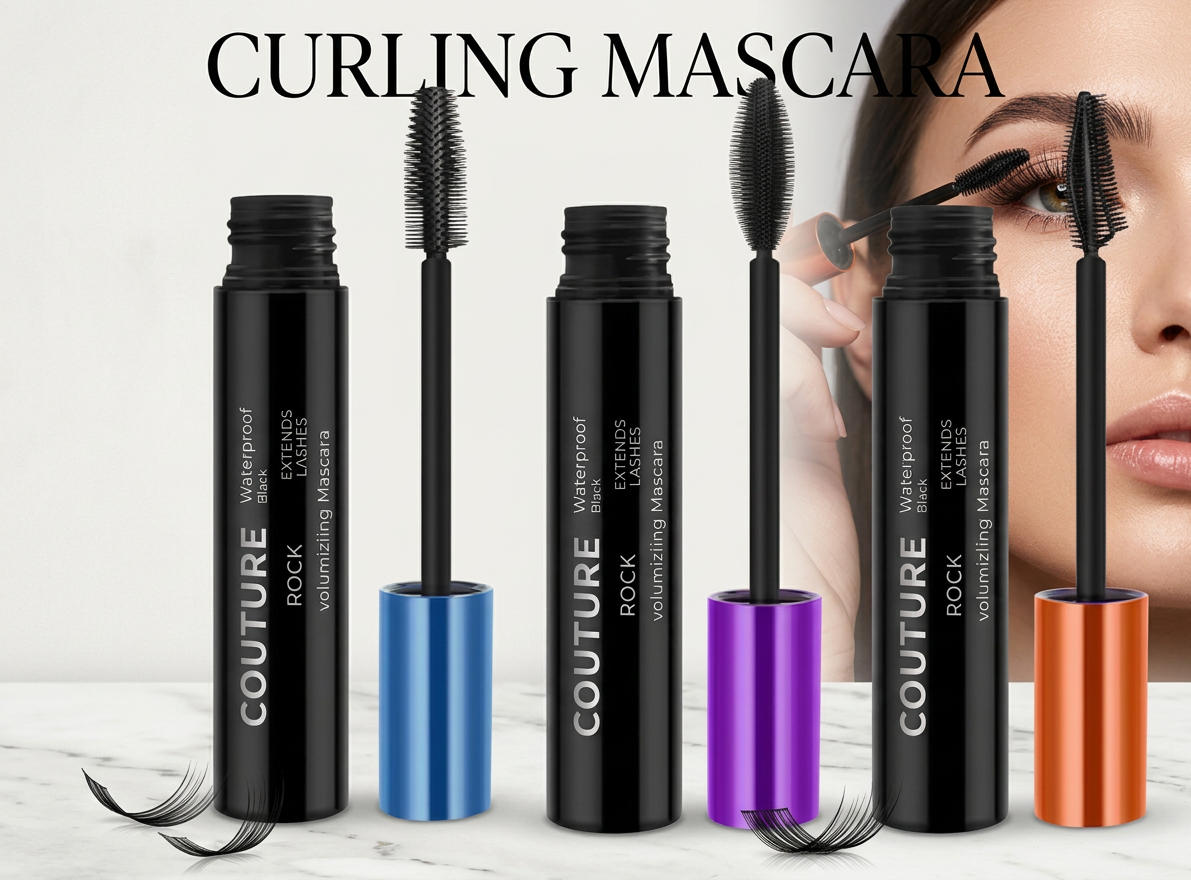
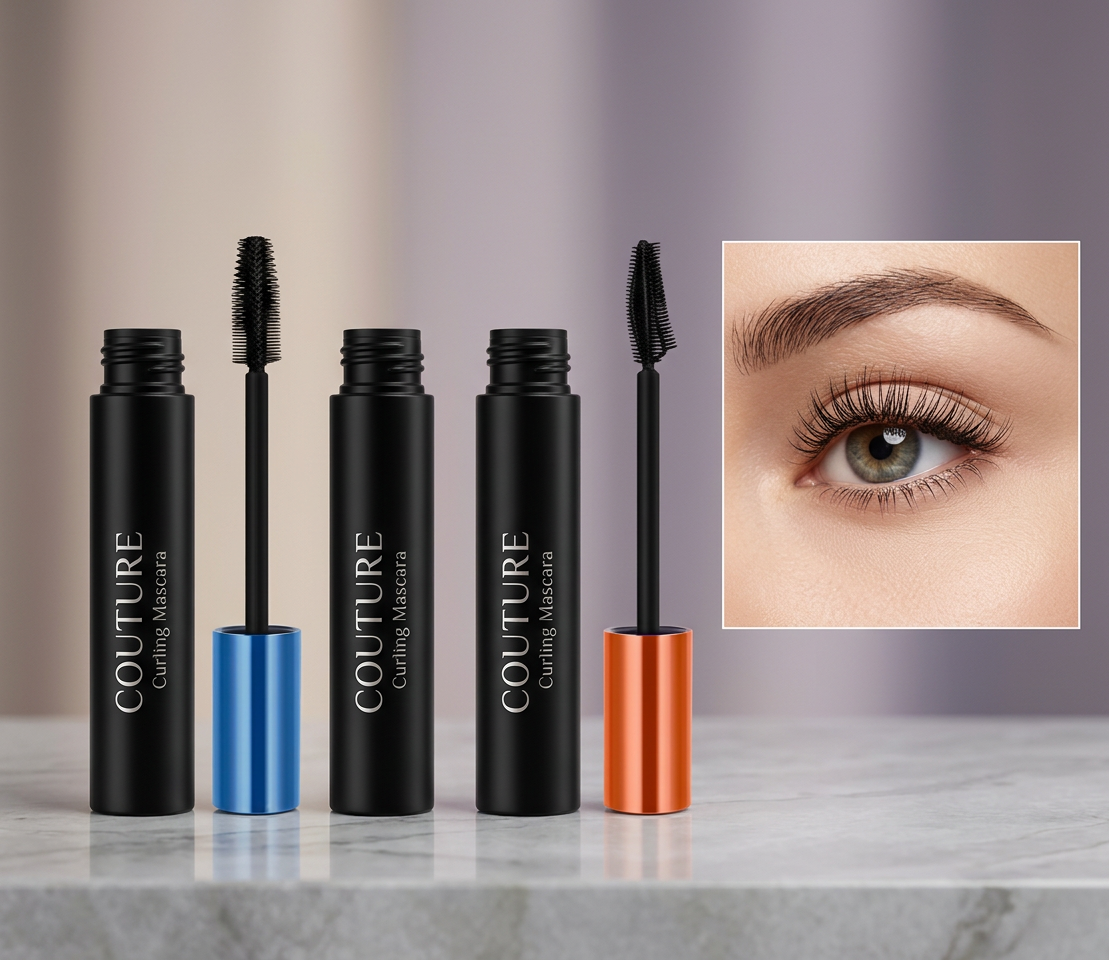
The VEYA Curling Mascara concept may be developed around curl lock, waterproof and sweat-proof wear, smudge resistance, clump-free volumizing and lengthening, and a glossy black finish. Claims such as “up to 24-hour wear” or “no lash dropping” should be published only for a specific finished product with suitable supporting test results.
Long-wear performance comes from the complete product—not one ingredient or a single laboratory observation. The formulation must also work with its selected brush, wiper, and tube.
A film-forming system helps mascara coat the lashes and remain in place. Its design can influence water resistance, flexibility, transfer, and removal.
Waxes and texture-setting ingredients help determine the formula’s body. Too little structure may limit the intended effect; too much can make application heavy or clumpy. The right balance depends on whether curl, volume, length, or a combination is the priority.
Even pigment dispersion helps a glossy black mascara coat lashes consistently. Assess the color and finish on lashes, not only the appearance of the bulk formula.
Mascara needs enough working time for application while setting soon enough to reduce early transfer. If it sets too quickly, layering may become difficult; if it stays wet too long, blinking may leave marks.
The brush affects root access, lift, separation, and lower-lash application. The wiper determines how much formula remains on the wand. Both should be tested with the final formula in the intended packaging.
A nourishing mascara formula may include conditioning ingredients as part of its cosmetic product concept. The highlighted ingredients below should be confirmed against the final approved ingredient list before they appear in product descriptions.
Ricinus Communis Seed Oil, or castor seed oil, is used in cosmetics as a conditioning ingredient. Its inclusion does not establish a lash-growth benefit.
Simmondsia Chinensis Seed Oil, or jojoba seed oil, may contribute to the formula’s conditioning feel. Its effect depends on the complete formulation.
Vitamin E can support an antioxidant-focused formulation concept. The precise ingredient name and any stated benefit should reflect the approved formula and applicable claim requirements.
Squalane is valued for a smooth cosmetic feel. In mascara, it must be balanced with the ingredients responsible for setting and wear.
Together, these ingredients can support a care-oriented product story. They do not, on their own, prove that a mascara is gentle, waterproof, smudge-proof, or suitable for every user.
Application cannot turn an untested formula into a waterproof one, but it can help users get a cleaner result from the mascara they have.
1. Start with Clean, Dry Lashes
Allow skincare to settle, and remove visible residue from the lashes before application. This helps the mascara coat them more evenly.
2. Curl Lashes Before Mascara
Use an eyelash curler gently on bare lashes. A conventional curler used after mascara may stick to coated lashes or pull on them.
3. Wipe Excess Mascara from the Wand
Let the tube’s wiper remove excess product. Avoid repeatedly pumping the wand, which can introduce air into the tube.
4. Apply from Roots to Tips in a Zigzag Motion
Begin near the roots and move upward with a small side-to-side motion. Apply a controlled layer rather than repeatedly loading the same lashes.
5. Coat Inner, Outer, and Lower Lashes Carefully
Use a light touch on the inner corners and lower lashes. Apply only as much product as needed for definition.
6. Let the First Coat Dry Before Adding a Second Layer
Allow the first coat to partly set before layering, according to how the formula behaves. A fully hardened coat may be harder to brush through without clumps.
7. Avoid Heavy Layering Near the Lower Lash Line
Extra product on lower lashes can increase contact with under-eye skin. Keeping that coat light may help reduce transfer.
For product development, begin by defining the conditions the mascara is expected to handle. “Long-wear” alone is too broad to guide formulation or testing.
Identify whether the priority is watery eyes, humid conditions, oily eyelids, lower-lash wear, or an extended daily routine. Different scenarios call for different evaluations.
A brief may combine waterproof mascara, sweat-proof mascara, smudge-proof mascara, curling mascara, lengthening mascara, volumizing mascara, and a nourishing mascara formula. Rank these goals so performance trade-offs can be assessed rather than assumed away.
Evaluate the lifted appearance immediately after application and at defined wear intervals. Include a range of natural lash shapes where practical.
Check whether added volume or length makes lashes drop. A more dramatic first impression is not always a better curling result later in the day.
Compare how brush shape and bristle arrangement affect pickup, root access, separation, and lower-lash control with the proposed formula.
Test the brush and wiper together. Excess pickup may encourage clumps; too little may make users apply repeated coats to see an effect.
Review the first coat and layered application. Assess whether lashes remain separated without requiring extensive brushing.
A highly pigmented glossy black finish should look even across the lashes and remain consistent with the product’s intended wear appearance.
Tube closure, brush handling, wiper fit, decoration, labeling, and formula compatibility all matter. Functional packaging is part of mascara performance, not merely its presentation.
Mascara can be coordinated with eyeliner, eyeshadow, eyebrow products, eye makeup remover, and makeup sets. For a waterproof product, clear removal instructions are particularly useful.
What is the difference between waterproof and smudge-proof mascara?
Waterproof mascara is designed to resist specified water exposure. Smudge-proof mascara is designed to reduce unwanted transfer onto nearby skin. One property does not guarantee the other.
Can a mascara be both waterproof and smudge-proof?
Yes. A finished formula can be developed and tested for both performance goals, alongside other targets such as curl, volume, and removal.
Is waterproof mascara useful for keeping lashes curled?
It may help preserve the mascara coating during moisture exposure, but waterproof performance alone does not prove curl retention. Formula weight, lash type, and application also matter.
Why does mascara smudge under the eyes?
Possible causes include skin oil, skincare residue, blinking, lower-lash contact, incomplete setting, and heavy application. A lighter lower-lash coat may help.
What ingredients are included in this Curling Mascara formula?
The stated Curling Mascara concept highlights Ricinus Communis Seed Oil, Simmondsia Chinensis Seed Oil, Vitamin E, and Squalane. Confirm their inclusion against the final product’s approved ingredient list.
Can VEYA Cosmetics support custom waterproof and smudge-proof mascara development?
Yes. VEYA Cosmetics supports mascara OEM/ODM development, including formula direction, brush and packaging coordination, samples, and evaluation of proposed wear-performance claims.
The most useful waterproof vs smudge-proof mascara comparison is not about which label sounds stronger. It is about identifying the conditions a product needs to resist and testing those conditions separately. For a curling mascara, clean wear also depends on lash separation, manageable formula weight, brush pickup, and curl retention.
With more than 20 years of makeup industry experience, VEYA Cosmetics supports brands in developing eye makeup concepts around clearly defined performance goals—so the finished mascara, its packaging, and its product claims tell the same story.
Your email address will not be published. Required fields are marked *