English
 Español
 Deutsch
Industry News

(86-579)8507 2566
Welcome to Zhejiang Weiya Cosmetics Co., Ltd.





Welcome to Zhejiang Weiya Cosmetics Co., Ltd.
Jul 31, 2026
A woman applying makeup before a wedding notices something in the mirror — her foundation looks flawless, but her face somehow looks flatter than it does in natural daylight without any makeup at all. That's not a foundation problem exactly. It's what happens when a single, even layer of product smooths over the natural shadows and highlights that give a face its actual shape. A Cream Foundation Contour Palette exists specifically to bring that dimension back, pairing foundation shades with contouring tones so the face doesn't lose its structure under all that coverage. A basic foundation bottle is built to even out skin tone and stop there. A contour palette does more — it hands someone the tools to rebuild depth and shadow that foundation naturally erases, all without needing five separate products scattered across a bathroom counter.
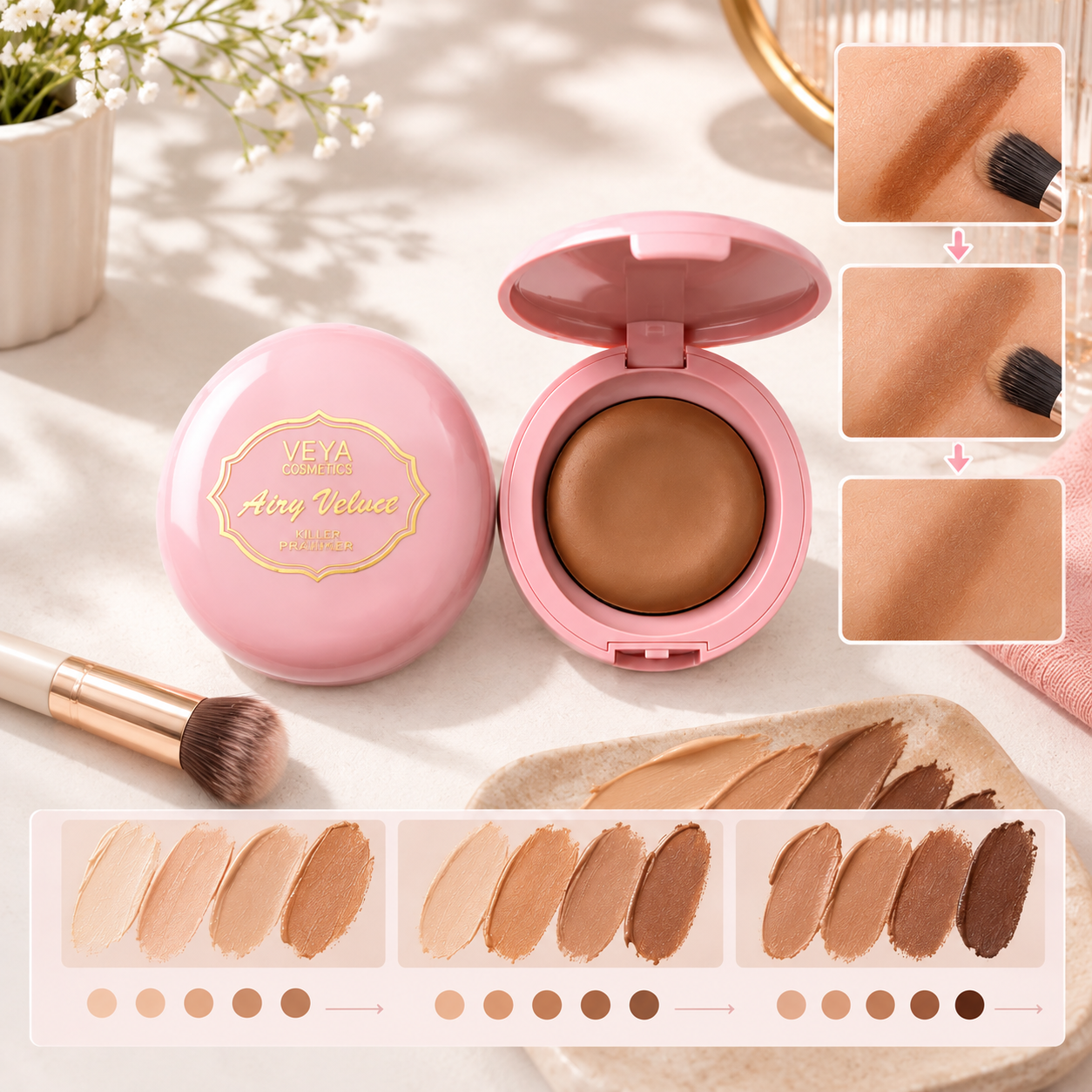
A Cream Foundation Contour Palette bundles several cream-based shades together, each one doing a different job — evening out skin, brightening certain spots, deepening others to suggest shadow.
The logic behind it is pretty simple once it clicks. Lighter shades pull the eye toward certain areas. Deeper shades push things back, creating the illusion of shadow where there might not naturally be much.
A typical palette usually breaks down like this:
| Shade Type | What It's Actually For |
|---|---|
| Foundation tones | Evens out the base layer of skin |
| Light shades | Brightens spots that need more attention |
| Contour shades | Builds in shadow and shape |
| Blending tones | Smooths the transition between areas |
Cream blends into skin more easily than powder does, which is a big reason it's become the go-to texture for anyone chasing a softer, more natural look instead of something that reads as heavily made up.
Every face naturally has its own pattern of light and shadow — that's literally what gives cheekbones their shape and a jawline its definition. Nobody's face is flat in real life.
Makeup design borrows from that natural structure instead of fighting against it. Shifting color placement slightly can make facial proportions read as more balanced without changing anything about the actual bone structure underneath.
Facial dimension plays into things like:
A flat foundation base can accidentally erase a lot of that natural shadow, leaving a face looking a bit less expressive than it does without any makeup at all. Adding contour and highlight back in restores some of that depth that got smoothed away.
Having several shades bundled into one palette makes managing that whole process a lot more practical than juggling separate products for each step.
Contour makeup runs on one basic principle — light draws the eye forward, shadow pushes things back. That's the entire mechanic behind it.
A cream contour palette makes that principle easy to actually apply, since everything needed sits in one compact case.
The general process usually goes something like:
Balance really is the whole game here. Too much contrast between light and dark reads as obvious and a bit theatrical. Carefully blended shades read as natural, like the face just happens to catch light that way.
Cream lets someone build up coverage slowly instead of committing to one heavy layer right away, which gives a lot more control mid-application if something needs adjusting.
Texture changes everything about how a makeup product actually behaves once it's on the skin.
Cream products tend to get chosen for contouring because they move more easily during application — fingers, brushes, sponges, whatever tool someone reaches for, cream tends to cooperate.
Compared to drier, powder-based formulas, cream tends to offer:
| Feature | What It Does During Application |
|---|---|
| Smooth glide | Helps color move evenly across skin |
| Blendable texture | Makes gradual transitions easier to pull off |
| Layering control | Lets someone build intensity up slowly |
| Softer finish | Keeps the overall look from feeling heavy |
That texture matters a lot for anyone who wants their makeup to look present but not obvious — the kind of contour that reads as "great skin" rather than "makeup."
A carefully blended cream contour holds onto that natural skin-like quality while still adding real visual structure underneath.
Different areas of the face respond to contour placement in pretty different ways, since bone structure and natural shadow vary from spot to spot.
None of this is about redesigning a face. It's about nudging attention toward features that are already there.
Contour placed along the hollow of the cheek can create the look of more defined cheekbones, with light and shadow working together to add real depth.
This area needs a much lighter hand, since it's front and center and any harsh lines show up immediately. Gentle blending matters more here than almost anywhere else on the face.
A little shadow tucked along the jaw can sharpen up the whole outline of the face without looking heavy-handed.
Contour near the hairline can help balance out the upper part of the face against everything happening lower down.
How this actually turns out depends a lot on technique, the specific product, and the bone structure someone's actually working with.
Cream contour palettes show up in kits belonging to professional makeup artists just as often as they sit in a regular person's bathroom drawer.
Their flexibility is really what makes them useful across such different situations.
Artists working with different clients need shades and looks that can shift from one face to the next, and a multi-shade palette covers a lot of that ground in one product.
Anyone who likes experimenting tends to appreciate having several shades bundled together instead of buying separate products for each step.
For weddings, photos, or nights out where someone wants their features looking a bit more defined, contour palettes make that a lot more achievable.
Plenty of people just want a hint of definition for a normal Tuesday, and cream contour scales down just as easily as it scales up.
How much gets applied really just comes down to what look someone's actually going for that day.
A natural-looking contour really comes down to blending and restraint more than anything else.
Piling on too much product in one spot is the fastest way to make contour look obvious instead of like natural shadow. Building it up gradually tends to look a lot more believable.
A few habits that tend to help:
Tools matter here too. A dense brush creates a different effect than a damp sponge or bare fingers, so it's worth experimenting to find what actually blends best for a given formula.
The whole goal is getting contour and foundation to read as one cohesive layer, not two separate things sitting on top of each other.
Picking the right contour palette comes down to understanding personal habits and what kind of look actually gets worn most often.
A few things worth weighing:
| Consideration | Why It Actually Matters |
|---|---|
| Shade range | Needs to actually match individual skin tone |
| Texture preference | Shapes how comfortable application feels |
| Usual makeup style | Determines how much contouring actually gets used |
| How easily it blends | Affects whether the final look reads as natural |
| How often it'll get used | Helps figure out if it's worth the investment |
A palette with genuinely well-matched shades makes the whole process a lot smoother and more forgiving, especially for anyone still figuring out their technique.
It's worth thinking honestly about how often contouring actually happens day to day versus how often it's saved for special occasions, since that shapes which palette actually makes sense.
Makeup keeps moving toward products that flex to fit a person rather than locking them into one fixed result. A Cream Foundation Contour Palette fits that shift by combining complexion coverage and facial shaping into a single product instead of treating them as separate steps requiring separate purchases. It gives people room to move between subtle, everyday makeup and something a lot more defined and dramatic, all without switching products entirely. This really reflects a bigger shift in how makeup gets talked about now. It's not just about color anymore — it's about balance, structure, and helping someone's face show up the way they actually want it to. Cream Foundation Contour Palettes fit into that shift by putting light, shadow, and complexion tones all in one place, giving people real control over how those elements work together on their own face.
Your email address will not be published. Required fields are marked *