English
 Español
 Deutsch
Industry News

(86-579)8507 2566
Welcome to Zhejiang Weiya Cosmetics Co., Ltd.





Welcome to Zhejiang Weiya Cosmetics Co., Ltd.
Jan 09, 2026
Full coverage concealer is like a secret weapon in your makeup kit—it can hide blemishes, brighten tired eyes, and give your skin a polished appearance with just a few well-placed swipes. For beginners, it may seem intimidating, but with the right techniques, anyone can use it to enhance natural beauty without looking overdone.

Choosing the Right Full Coverage Concealer
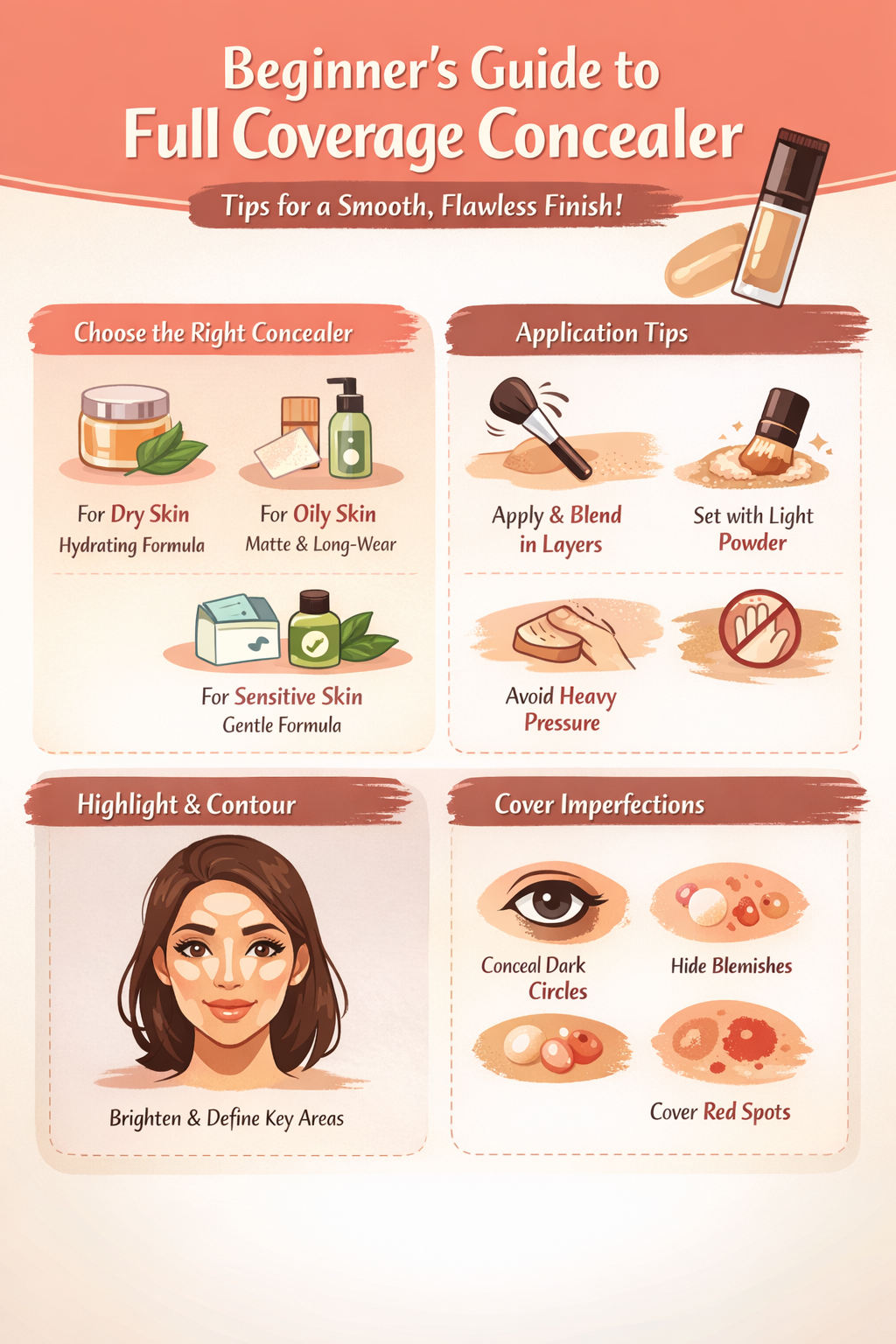
Choosing a concealer is the first step toward success, and it starts with your skin type. For dry skin, creamy or hydrating formulas are the best option. These products glide over the skin, preventing dry patches from making an unexpected appearance. Think of it as spreading butter on toast—smooth and even, no crumbles allowed. Oily skin, on the other hand, benefits from matte or long-wear concealers. These formulas stick to the skin without sliding around, helping your makeup stay in good state at a busy day. Sensitive skin requires gentle formulations free from fragrances and harsh chemicals. Testing a small patch before full application ensures your skin won’t stage a protest. Choosing the right formula sets the stage for a smooth, natural finish.
Application Techniques for Beginners
Applying full coverage concealer is all about control. Start with a small amount of product and apply in thin layers, building coverage gradually. Using a makeup sponge or a small brush allows you to tap the concealer gently onto the skin rather than rubbing, which can move the product around or accentuate fine lines. Patting motions are your best friend here—they ensure the concealer sits perfectly while blending seamlessly with the surrounding skin.
Setting the concealer is another essential step. A light dusting of translucent powder helps lock the product in place without creating a cakey look. Avoid pressing too hard with your brush or sponge; gentle pressure keeps the finish natural. Beginners often overlook this step, but it’s what separates a well-applied concealer from one that disappears halfway through the day.
Highlighting and Contouring with Concealer
Full coverage concealer isn’t just for hiding; it’s also excellent for highlighting. Applying it under the eyes in a triangle shape helps lift and brighten the area. You can also apply a thin line along the forehead, nose bridge, and chin to subtly enhance facial dimensions. Blending carefully with a sponge or brush ensures that the highlighted areas appear soft and natural rather than stark. A tip for beginners: start with less product—you can always add more if needed. Think of it as a “less is more” approach that avoids a spotlight effect on your face.
Covering Dark Circles, Blemishes, and Spots
The true power of full coverage concealer lies in its ability to mask imperfections. Dark circles benefit from a slightly lighter shade, which brightens without looking artificial. Redness, acne marks, or age spots require a shade that closely matches your natural skin tone to maintain a seamless finish. Apply concealer in thin layers and blend edges carefully so it looks like your skin, not like makeup glued on. Targeted application combined with careful blending creates a smooth, even canvas ready for the rest of your makeup.
Conclusion
Full coverage concealer is a versatile tool that enhances your makeup routine while remaining beginner-friendly. By selecting the right formula, mastering application techniques, using highlighting strategically, and blending carefully, anyone can achieve a natural and polished look. With practice, concealer becomes less of a challenge and more of a fun tool—your small wand for hiding imperfections and enhancing features.
Remember, the goal isn’t having everything flawless; it’s about creating smooth, balanced coverage that blends seamlessly with your skin. By applying gently and blending carefully, you can enhance your natural features, brighten areas that need attention, and achieve a polished look that still feels light and comfortable.
Your email address will not be published. Required fields are marked *