English
 Español
 Deutsch
Industry News

(86-579)8507 2566
Welcome to Zhejiang Weiya Cosmetics Co., Ltd.





Welcome to Zhejiang Weiya Cosmetics Co., Ltd.
Nov 23, 2026
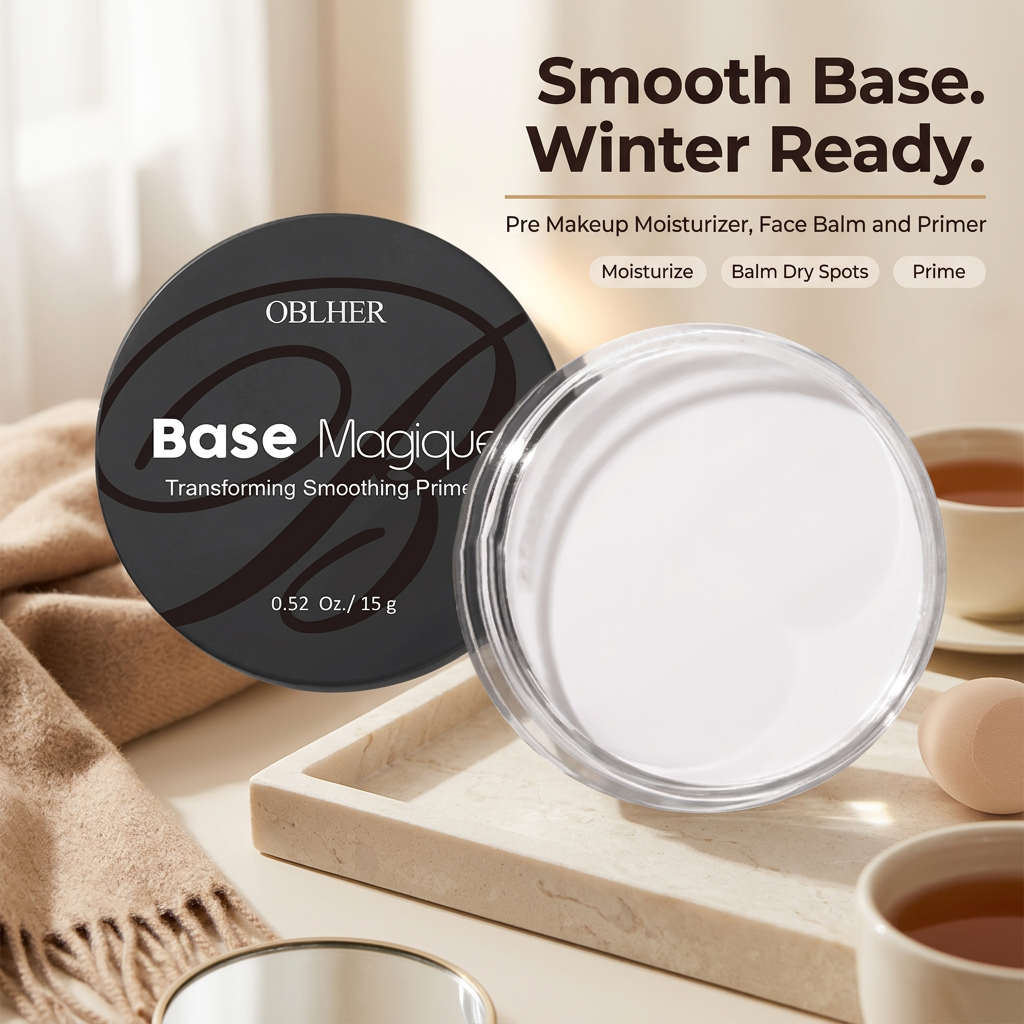
Foundation that looked smooth at the mirror can break up around the nose and cheeks by midday. Cold wind, heated rooms, and a rushed morning routine all play a part. A routine built on a Pre Makeup Moisturizer, a Hydrating Face Balm, and a Makeup Base Primer prepares the skin so foundation sits more evenly. Adding more coverage over dry patches rarely helps. Giving the skin moisture and a settled surface before makeup usually does more, and it keeps the finish looking like skin instead of a mask.
Cold outdoor air, indoor heating, and frequent moves between the two leave skin feeling tight. Dryness shows first around the nose, mouth, forehead, and cheeks, where the skin moves and creases most.
Foundation seldom creates these patches. It makes existing texture easier to see, because liquid formulas collect around rough spots instead of spreading across them. Powder can sharpen the effect further by sitting on top of every tiny ridge.
Heated offices, car heaters, and long train rides all pull moisture from the skin. Someone who steps from a cold street into a warm carriage may notice tightness within minutes. A scarf rubbing the chin and jaw can also roughen the surface by midday.
Adjusting the morning routine to how the skin feels that day is more useful than following one fixed set of steps. A face that feels fine after a mild morning may need extra care after a windy commute.
Pre-makeup care covers cleansing, moisturizing, targeted nourishment, and primer. Each product has its own job, and using them with care matters more than stacking layers.
A Pre Makeup Moisturizer provides everyday hydration across the face. Skin that feels soft and flexible takes foundation more smoothly than skin that feels tight or rough. The moisturizer also forms a comfortable layer between bare skin and cosmetics.
Apply a modest amount and give it a few minutes. Foundation applied over a layer that is still wet tends to slide and pill. A good habit is to cleanse, moisturize, and then do something else, such as brushing teeth or drinking tea, before starting on makeup. That short pause lets the product settle.
A short sequence works better than a crowded shelf. These steps keep the face comfortable without overloading it.
Use a mild cleanser and lukewarm water. Hot water and hard scrubbing make dryness more visible. Pat the face with a soft towel and leave it slightly damp before moisturizer.
Skip exfoliation on days when the skin feels rough or irritated. Scrubbing a dry cheek may remove flakes for an hour, but the surface often looks worse afterward.
Spread the Pre Makeup Moisturizer over the whole face, paying extra attention to the cheeks. Smooth it on with light strokes instead of rubbing, since friction lifts dry skin. Let it settle before moving on.
A Hydrating Face Balm has a richer texture than lotion. It suits the spots that stay dry even after moisturizer, such as the sides of the nose, the corners of the mouth, and the cheeks. Press a small amount onto those areas without rubbing.
A thick layer across the whole face can leave a greasy surface that foundation cannot grip. Targeted use gives dry areas attention while the rest of the face stays balanced. If a spot still feels tight after a few minutes, add a touch more balm to that spot only.
Moisturizer and primer are not interchangeable. Moisturizer cares for skin, while a Makeup Base Primer prepares the surface for makeup. Finishes vary, from hydrating and fresh to smoothing or shine-reducing.
For winter, a primer that feels comfortable on dry skin usually works better than a strongly mattifying one. Use a thin layer where foundation tends to turn uneven, such as around the nose and across the cheeks. Wait for it to settle before reaching for foundation.
Start at the center of the face and blend outward with a clean sponge or brush. Add coverage only where it is needed. A lightly damp sponge can help press product into the skin without dragging it.
Avoid rubbing repeatedly over flaky spots. Use powder sparingly, and only where shine appears. If a patch still shows, go back to skincare preparation instead of adding more foundation.
| Product | Main Purpose | Where to Apply |
|---|---|---|
| Pre Makeup Moisturizer | Everyday hydration | Whole face |
| Hydrating Face Balm | Richer nourishment | Dry areas only |
| Makeup Base Primer | Surface preparation for makeup | Areas receiving foundation |
The balm does not have to replace the moisturizer. It works alongside it as an extra step for stubborn dry spots. The primer then sits on top, and each layer keeps its own role.
Skin behaves differently from person to person, and even across one face. Winter often changes a skin type that felt settled in summer.
Notice how the face feels after cleansing. Tightness within a few minutes suggests the routine needs more moisture, while a slick feeling suggests lighter products.
Good products can still fail when used the wrong way. A few small changes often fix the problem.
Through the day, notice how the face feels after time outside or in a heated room. If the cheeks tighten, adjust the moisturizer or add a little balm where needed. Keep exfoliation gentle and avoid combining several potentially irritating products before makeup.
Foundation looks better when the skin underneath has been looked after. A Pre Makeup Moisturizer, a Hydrating Face Balm, and a Makeup Base Primer each cover a different part of that preparation.
Explore our skincare and makeup preparation range to find a moisturizer, balm, and primer that suit your skin through the colder months. Choose formulas that work together in a daily routine, so every layer stays comfortable from morning until evening.
Your email address will not be published. Required fields are marked *