English
 Español
 Deutsch
Industry News

(86-579)8507 2566
Welcome to Zhejiang Weiya Cosmetics Co., Ltd.





Welcome to Zhejiang Weiya Cosmetics Co., Ltd.
Nov 20, 2026
A smoky eye can look soft and mysterious, or bold and sharply defined. Getting there doesn't always go to plan, though. Colors can blend into a flat grey patch, dark shadow can make the eye area look heavy, or the finished look can draw attention to under-eye puffiness. Worries like these make plenty of people hold back from trying a deeper eye look.
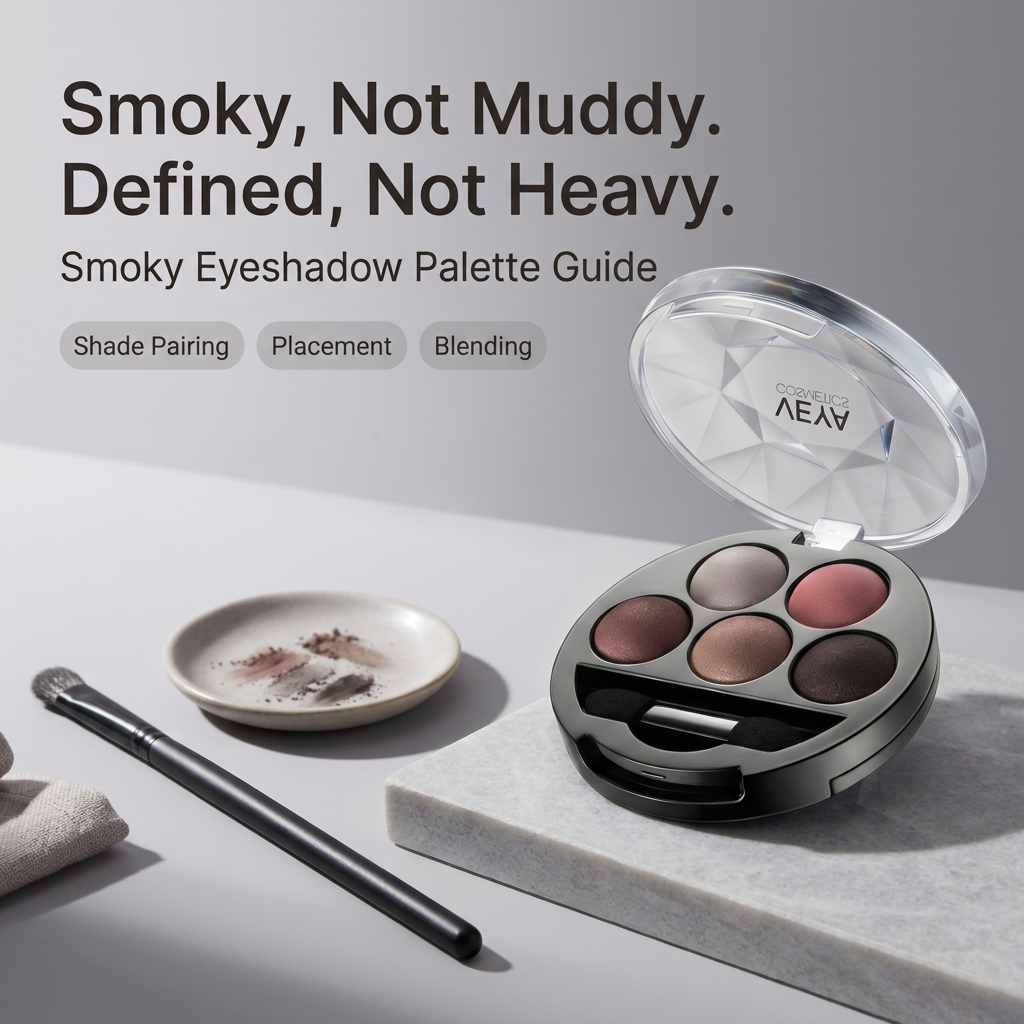
A Smoky Eyeshadow Palette usually holds several shades you can layer for depth and contrast. Picking dark colors isn't the hard part. What takes practice is understanding how tones work together and how placement changes the way the eyes look.
Muddy makeup and puffy-looking eyes are separate problems. Muddy color tends to come from poorly matched shades, too much blending, or too much product. A puffy look can be shaped by natural eye shape, skin texture, lighting, and where dark or reflective shades sit.
Which one deserves more of your attention? That depends on your features and what you want from the look. Understanding both gives you better control.
Muddy shadow shows up when colors lose their character after blending. Rather than a smooth transition, the shades merge into a dull, unclear patch.
It can happen when colors with different undertones are combined without a transition shade. Warm brown, cool grey, and strong purple, for example, may not blend well if their placement and intensity aren't balanced.
Over-blending adds to the problem. Keep brushing over one spot and the differences between colors fade, so the result looks flat instead of layered.
Common causes include:
A smoky look needs contrast. When every shade ends up mixed into one spot, the eye loses its definition.
The fix isn't necessarily fewer colors. Give each shade a clear job. Light tones soften the base, medium colors build depth gradually, and darker shades define chosen areas.
Color relationships shape a smoky look strongly. Two shades can look lovely alone and still give an odd result once blended.
Warm colors include brown, bronze, copper, and muted red tones. Cool colors include grey, charcoal, and some purple or taupe shades. Neutral colors help link the groups.
A smoky look feels more coordinated when the shades share a related color direction. Contrasting colors aren't off limits. They just need more care in placement and blending.
| Shade Group | Visual Character | Possible Use |
|---|---|---|
| Warm brown | Soft and natural depth | Everyday smoky makeup |
| Cool grey | Muted and defined | Classic smoky effects |
| Taupe | Balanced neutral appearance | Transition between shades |
| Bronze | Warm reflective color | Adding dimension |
| Charcoal | Deep and noticeable | Outer-corner definition |
| Muted plum | Soft color variation | A different smoky style |
A transition shade earns its place here. It connects the light base with the deeper colors and closes the gap between them.
Think about your complexion and eye color too. A shade that looks warm on one person can look muted on another. Testing combinations in natural light shows whether they work together.
A coordinated 5 Pan Eyeshadow Palette gives a smaller group of shades to people who like a simple color setup. How the colors relate matters more than how many there are. A useful set might hold a light base, a transition shade, a deeper matte color, and one shade in a different finish.
Dark shadow adds depth, but placement changes how the eye area reads. A large amount of deep color across the lid and lower lash line can make the whole area look heavy.
This can show more on people whose lids have a natural fold or whose under-eye area looks full. Dark colors add to the sense of shadow, especially when spread too wide.
Dark shadow doesn't automatically make eyes look puffy. The outcome depends on your eye shape, where the color goes, and the balance between light and dark shades.
A more controlled approach helps:
Put darker shades on selected areas, such as the outer corner or close to the upper lash line. You get definition without covering the whole lid.
A medium brown or taupe links deep color to the surrounding skin and softens the look.
A thick dark line along the lower lashes can add weight. A narrow, blended layer gives definition with less bulk.
If the upper lid already has deep shades, go lighter on the lower lash line to keep the look even.
Keep in mind that temporary under-eye puffiness often has causes unrelated to makeup. Eyeshadow changes visual contrast. It doesn't treat swelling or change the skin underneath.
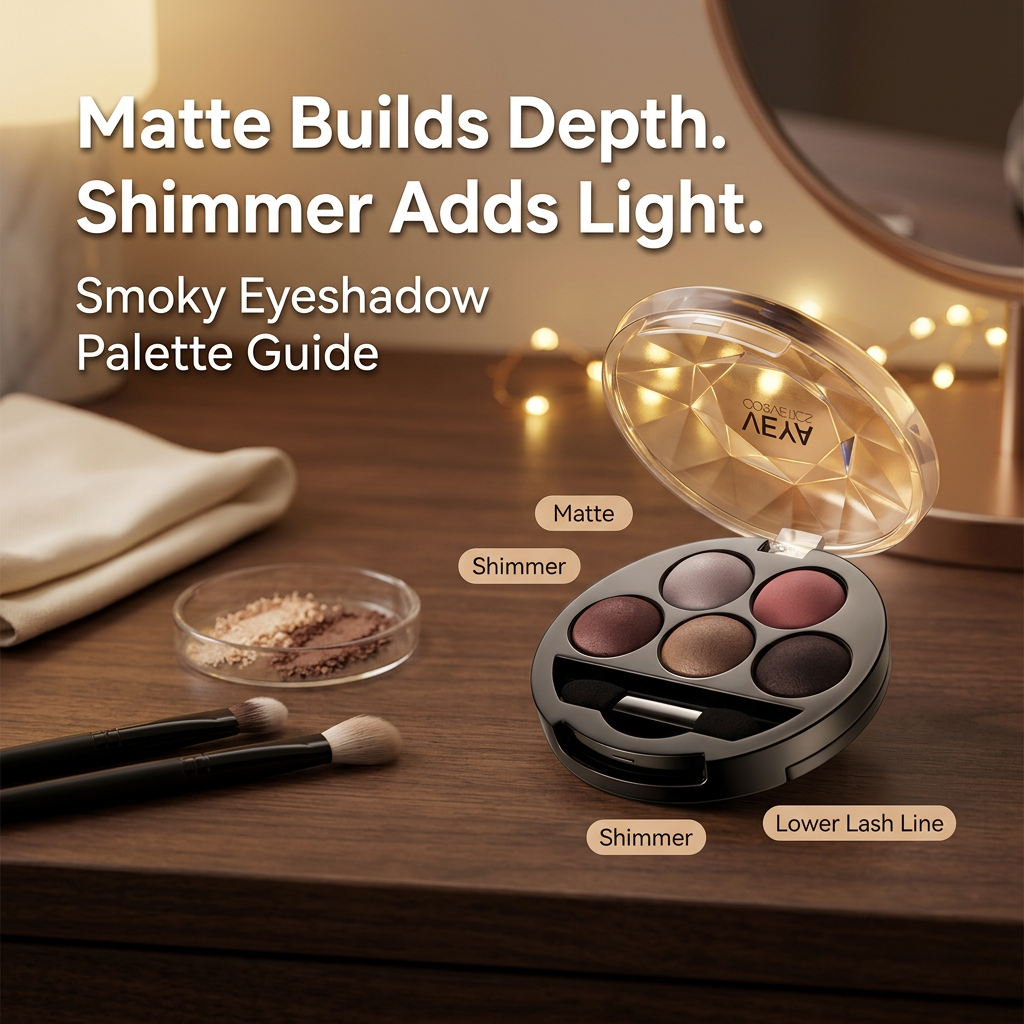
Matte and shimmer shades do different work in smoky makeup. Matte colors build depth without reflecting light. Shimmer shades bounce light and pull attention to chosen areas.
Together they keep a smoky look from going flat. A matte shade can shape the outer corner, while shimmer at the center of the lid adds contrast.
Reflective products need careful placement, though. Shimmer across the whole lid and under the eyes can make the makeup look busy. On skin with visible texture, reflective particles can also highlight surface detail.
A balanced approach might look like this:
| Finish | Makeup Function | Placement Consideration |
|---|---|---|
| Light matte | Creates a soft base | Across suitable eyelid areas |
| Medium matte | Builds gradual depth | Around the crease or outer lid |
| Deep matte | Adds definition | Outer corner and upper lash line |
| Light shimmer | Adds brightness | Center or inner eyelid |
| Satin finish | Creates gentle reflection | Selected areas for a softer effect |
Choose finishes to match your style. If you like understated makeup, use mostly matte colors with a small shimmer accent. A more dramatic look can carry stronger reflective details, with matte shades keeping the structure.
A Compact Eyeshadow Palette works well when it holds coordinated matte and shimmer shades. A smaller selection makes combinations easier to follow and cuts down on switching between products.
Don't treat shimmer as a stand-in for blending. Reflective color sits best when it connects naturally with the shades around it.
Good habits make a visible difference. A smoky look doesn't need fancy technique, but it does reward gradual layering and controlled blending.
Start with a clean lid so color goes on evenly. If you use an eyeshadow base, follow the product instructions.
Keep the amount of product small. Adding color is easier than lifting an overly dark layer without disturbing the rest.
A practical routine:
Brush cleanliness matters. Leftover pigment from earlier makeup can change how a new shade looks. Cleaning suitable brushes regularly keeps colors clear.
Resist mixing many unrelated shades just because they're in the palette. A smaller combination with a clear color direction gives you more control.
The lower lash line can finish a smoky look, but it calls for a careful hand. Too much dark shadow below the eyes can make the area look smaller or more shadowed.
A soft approach suits everyday makeup. Place a medium matte shade close to the lower lashes and blend gently. Concentrate a deeper color near the outer corner to link the lower and upper sections.
The inner lower lash line can stay lighter if you want a more open look. Some people also skip shadow on part of the lower area.
Let your eye shape guide placement.
Brush choice counts because the lower lash line is narrow. A small, soft brush places color with more precision. Tap off excess powder first to reduce fallout.
Only use products where they're meant to go. Eyeshadow doesn't belong inside the eye or on the waterline unless the product is made for that.
Some people have naturally fuller lids or visible under-eye bags. Others notice temporary puffiness after waking up or when tired. Makeup can change how these features look, but it can't remove the cause.
When the eye area looks puffy, heavy dark shading can increase the contrast around it. A softer color arrangement keeps things balanced.
A few adjustments help:
Medium neutral shades give definition without darkening the whole eye area.
Reflective shades draw attention to wherever they sit. Keeping shimmer on parts of the upper lid helps avoid highlighting under-eye texture.
A thick dark line adds visual weight. A thin, blended layer suits better.
Depth concentrated at the outer corner gives structure without covering the full lid.
A look can seem balanced from the front and heavier from the side. Natural light helps you adjust placement.
If puffiness is sudden, persistent, painful, or comes with other symptoms, makeup isn't the answer. Medical advice may be needed to find the cause.
A palette should offer shades and finishes that fit your habits. If you like soft smoky makeup, neutral colors and subtle shimmer may suit you. If you prefer dramatic eyes, deeper tones and stronger contrast may work better.
It should also be easy to use. Coordinated colors help you build transitions without combining many unrelated shades.
When comparing products, consider these points:
| Selection Factor | What to Consider |
|---|---|
| Shade range | Whether light, medium, and deep colors are available |
| Color coordination | Whether the shades can be blended naturally |
| Finish selection | Whether matte and shimmer options suit personal preferences |
| Texture | Whether the product is comfortable to apply and blend |
| Packaging | Whether the palette is easy to store and handle |
| Intended use | Whether the instructions match the planned application areas |
A compact format suits people who like to carry fewer products. A smaller palette can still give useful combinations if its shades vary in depth and finish.
The 5 Pan Eyeshadow Palette format may appeal to people who value a focused color selection. It can support simple smoky looks when the shades are coordinated for layering. Look at the actual color range and product information instead of judging a palette by appearance alone.
Product descriptions and ingredient lists deserve a read. If you have sensitive skin or known ingredient sensitivities, review the components and follow the maker's instructions. Keep eye makeup tools clean, and don't share products where that could raise hygiene concerns.
Fearing muddy makeup or worrying about puffy eyes doesn't have to be an either-or choice. Muddy color mostly comes down to shade selection, product amount, and blending control. A heavy-looking eye area relates more to color placement, natural features, and the balance of light and dark finishes.
A well-planned smoky look can handle both concerns through gradual layering. Matte shades set the depth, shimmer adds selected highlights, and lower lash line color ties the makeup together without overwhelming the eyes. The right approach depends on the effect you want and how the shades interact with your natural eye shape.
Your email address will not be published. Required fields are marked *