English
 Español
 Deutsch
Industry News

(86-579)8507 2566
Welcome to Zhejiang Weiya Cosmetics Co., Ltd.





Welcome to Zhejiang Weiya Cosmetics Co., Ltd.
Nov 09, 2026
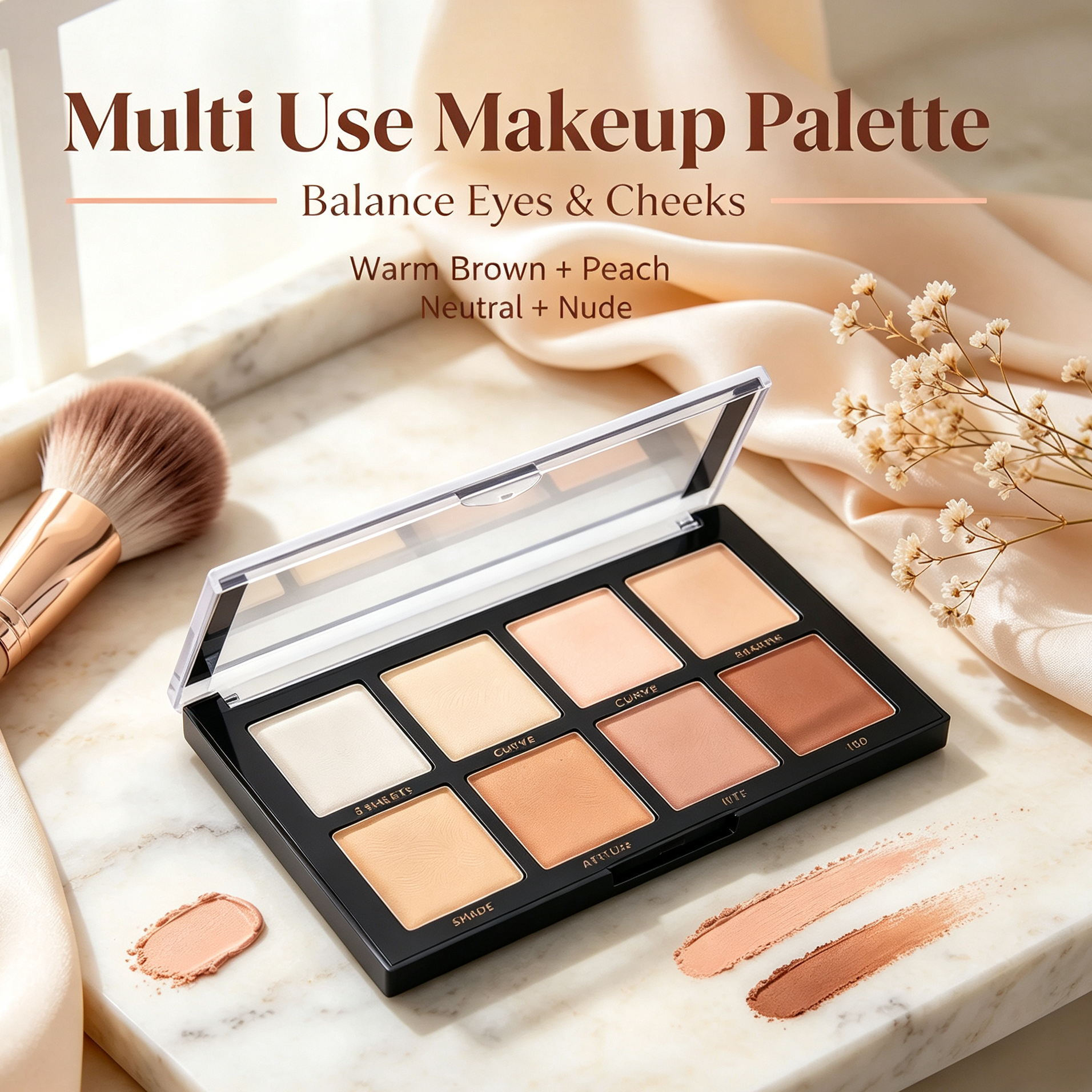
Anyone who has stood in front of a mirror holding a plum eyeshadow and a coral blush knows the problem: each looks fine alone, and together they argue. A Multi Use Makeup Palette puts related shades in one place, so eyes and cheeks can share a color direction without a long hunt through separate products. From soft peach cheeks with warm brown eyes to rosy tones that read fresh and romantic, a coordinated pairing makes everyday makeup look planned.
The link between eye color and cheek color changes how the whole face reads. When both areas lean the same way, the result feels connected. When they pull apart, the face can look patchy even if every shade is pretty.
Eyeshadow and blush do not need to match. They only need to get along. Warm brown on the lids with peach on the cheeks gives a gentle, sunlit warmth, and soft pink lids with rosy cheeks feel fresh. Depth adds interest: a light wash across the lid, a deeper tone at the outer corner, and a softer touch of a related shade on the cheeks give dimension without breaking the color story.
Choosing blush and eyeshadow from separate products often turns into guesswork. A palette that groups shades within one family removes much of it, and the compact format keeps a makeup bag tidy.
Think of the face as one color composition rather than two separate decisions. A few pairings are easy to wear.
Warm brown with peach. Brown defines the eyes gently while peach warms the cheeks. It suits daily wear, office days, and casual outings. Apply the brown lightly and build the peach slowly.
Pink with rosy blush. A soft pink lid gives a subtle flush, and rosy cheeks echo it. Choose a lighter pink for the eyes, build the blush gradually, and blend the edges so no line shows. It works for romantic or daytime looks.
Bronze with coral. Bronze adds depth, and coral adds a lively touch. This pairing suits dinners and outdoor gatherings. Keep the color where it is needed instead of spreading it across the whole face.
Neutral with nude pink. Taupe, beige, and soft brown with a nude pink blush add definition without announcing themselves, which suits people who like understated makeup.
| Eyeshadow shade | Matching blush | Overall appearance |
|---|---|---|
| Warm brown | Peach | Soft and warm |
| Pink | Rosy pink | Fresh and romantic |
| Bronze | Coral | Warm and lively |
| Taupe | Nude pink | Subtle and natural |
| Plum | Soft mauve | Gentle and expressive |
Shades behave differently on different complexions, so appealing colors in the pan are only a starting point.
Golden or warm-looking skin often suits peach, coral, caramel, and warm brown. Pink or cool-looking skin tends to flatter rosy, mauve, berry, and soft plum. Neutral complexions can move between both families, and soft brown, dusty pink, beige, and muted peach are flexible choices. Instead of following a strict rule, try shades in daylight and watch how they sit against your skin.
Depth matters as well. A very pale shade may nearly vanish on deeper skin, while a strongly pigmented one can look heavy on fair skin. Lighter complexions can explore soft pink, peach, and muted brown. Medium complexions often carry coral, rose, bronze, and warm brown well. Deeper complexions can look striking in rich berry, plum, terracotta, and deeper rose. The aim is color that stays visible and blends naturally.
Nothing here needs complicated technique. Decide on a direction first, such as warm brown with peach for a natural look or pink with rose for a fresher one. A clear direction stops shade mixing from getting muddy.
Start the eyes with a lighter shade across the lid, then add a deeper complementary tone at the outer corner or crease, and blend the edges softly. For the cheeks, choose a blush from the same family, place a small amount, blend outward, and build gradually. Too much product in one spot can make the face look disjointed.
Step back and look at the whole face. If the eyes are deep, keep the blush softer. If the eyes are quiet, a slightly stronger cheek adds interest.
| Makeup area | Application approach | Desired appearance |
|---|---|---|
| Eyelids | Light base shade | Soft color |
| Outer eye area | Deeper shade | Gentle definition |
| Cheeks | Related blush shade | Natural warmth |
| Overall face | Blend visible edges | Connected look |
Always check the packaging before using any shade near the eyes. A cheek product is not automatically safe for the eye area.
Mornings are short, and having matching shades together cuts decision time. It also helps when traveling or commuting, since one compact palette replaces several separate items, provided its formulas are made for multiple areas.
It encourages experimenting too. The same colors can give a quiet daytime wash, a deeper evening eye, a stronger cheek for a livelier look, or a custom mix of two related shades.
Start with the colors. A useful palette holds a light shade for soft eye definition, a deeper one for dimension, and a blush that complements them. Unrelated shades make coordination harder, not easier.
Texture counts. A formula that blends smoothly and builds gradually gives control over intensity, which matters when one product serves two areas.
| Finish | Appearance | Possible use |
|---|---|---|
| Matte | Soft and understated | Eye definition and cheeks |
| Satin | Gentle natural sheen | Subtle eye and cheek color |
| Shimmer | Light-reflecting effect | Eye accents |
| Cream | Smooth and flexible | Areas stated on packaging |
Not every finish suits every area, so follow the maker’s guidance. Check whether the product is approved for the eye area, whether certain shades carry restrictions, and whether the instructions are clear. People with sensitive skin should read ingredient lists and test as directed.
A monochromatic approach is a simple route. Pick one family, such as peach, pink, or brown, and use a light version on the lids with a related shade on the cheeks. A touch of something deeper around the eyes adds definition without changing the overall direction.
For a quiet look, keep both areas softly defined. For something bolder, raise the intensity in one place and leave the other gentle, which creates interest without overwhelming the face.
Some people lean toward warm peach pairings, others toward rosy pinks or deeper browns, and one palette can serve each preference depending on how its shades are used. At [Brand Name], our approach to multi-use beauty centers on thoughtful shade combinations and practical application that fits real routines. Explore our Multi Use Makeup Palette collection and find a combination that suits your complexion and style.
Your email address will not be published. Required fields are marked *