English
 Español
 Deutsch
Industry News

(86-579)8507 2566
Welcome to Zhejiang Weiya Cosmetics Co., Ltd.





Welcome to Zhejiang Weiya Cosmetics Co., Ltd.
Nov 05, 2026
Current makeup routines favor skin-like finishes, quick application, and fewer steps. A Double Ended Concealer or a Concealer with Sponge suits this approach. Each can combine color correction with everyday coverage for dark circles, redness, blemishes, and uneven tone. The result depends on shade choice, product order, and restraint with layers.
Color correctors and skin-tone concealers do different jobs. When each is applied thinly and in the right place, the complexion looks smoother, and the makeup is easier to maintain through the day.
Both products improve the look of uneven skin, but they work in different ways.
A corrector uses a shade that visually offsets an unwanted tone. A peach corrector can soften bluish under-eye shadows. A green corrector can tone down visible redness. Because it targets the discoloration directly, it avoids the need to cover the area with a thick layer of makeup.
A skin-tone concealer covers what remains after correction and blends the area into the surrounding complexion. Needs vary by area. Under-eye skin is thin and tends to crease, so it usually calls for a softer, lighter layer. A blemish may need slightly firmer coverage.
Each formula handles one task. The corrector balances the color, and the concealer adds coverage. For example, someone with bluish shadows under the eyes can tap a small amount of peach corrector in place first, then add a thin layer of concealer. Less concealer is needed than when it carries the whole job, which reduces the layered look that settles into fine lines.
Start with the discoloration, not the product. The same shade can look different depending on natural skin tone, pigment strength, and lighting.
| Corrector Shade | Common Area | Intended Effect |
|---|---|---|
| Peach | Under-eye area | Softens blue-looking shadows |
| Orange | Deeper-toned under-eyes | Balances blue-purple discoloration |
| Green | Red blemishes, around the nose | Visually tones down redness |
| Yellow | Purple-looking areas | Softens purple tones |
| Lavender | Yellowish areas | Balances a sallow appearance |
Peach tends to suit lighter to medium complexions, while orange works for deeper skin with stronger blue or purple tones. Green should be used sparingly. Too much can leave the skin looking dull or grayish.
A corrector that is too bright may show through concealer, and one that is too subtle may not change the discoloration. Test the shade on the intended area in natural daylight, since bathroom lighting often exaggerates both color and coverage.
Order matters. Correcting first allows the underlying color to be addressed before coverage is added.
Begin with clean, moisturized skin and allow skincare to settle. Concealer slides and separates over skin that still feels wet. Dry patches around the eyes and nose need extra attention, since concealer clings to them. A primer can help if it already belongs to your routine.
Apply corrector only to the area that needs it, not across the face. A small brush places pigment precisely, and a clean fingertip presses it into the skin. Tap rather than rub. Diffuse the edges and keep enough pigment in the center to do its work. A soft sponge helps avoid streaks.
Choose a shade that blends with the surrounding skin. Apply a thin layer directly over the corrected area, using a tapping motion. Dragging the applicator disturbs the layer beneath.
For blemishes, use a small amount and build gradually.
Under the eyes, focus on the inner corner and shadowed areas rather than covering the entire lower lid.
Look in natural light before adding more product. Blend visible edges with a clean sponge, lift away product that has collected, and set lightly where creasing tends to occur. Areas that already look smooth do not need powder.
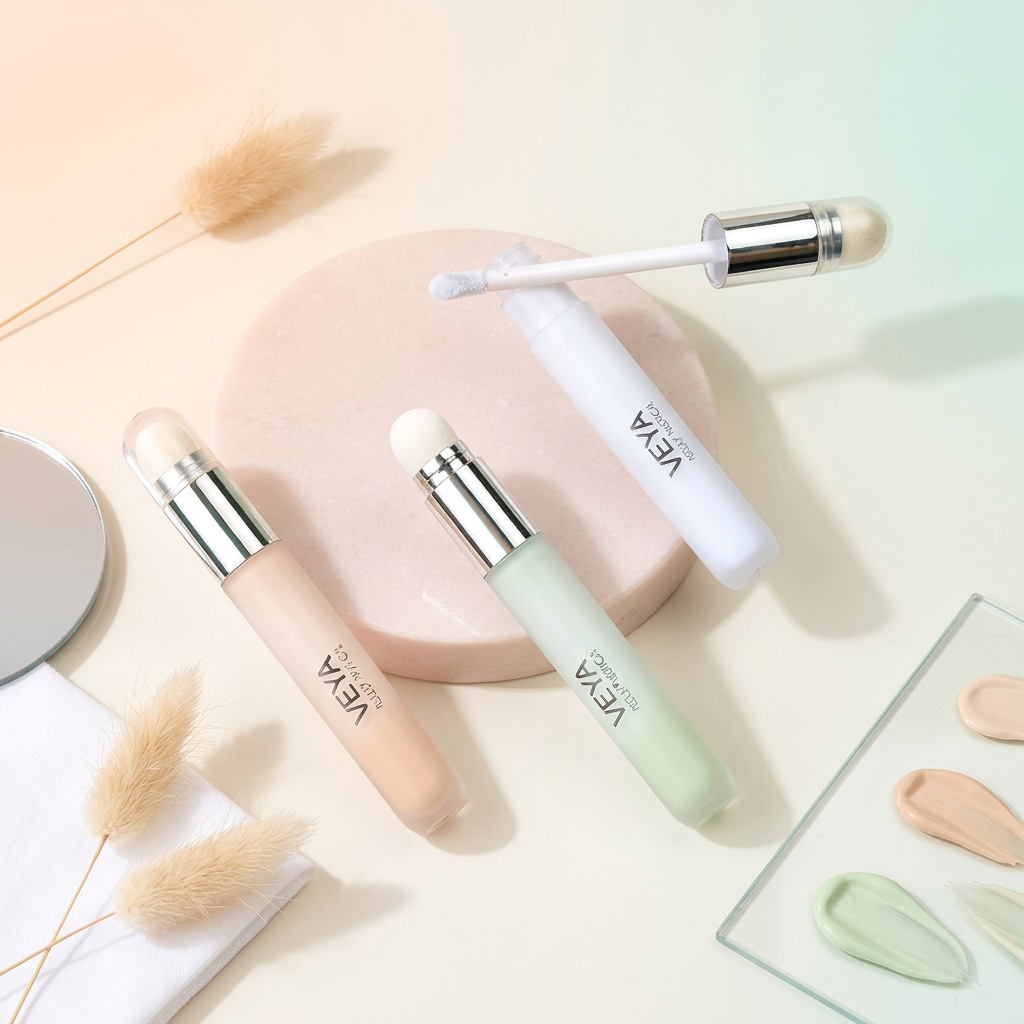
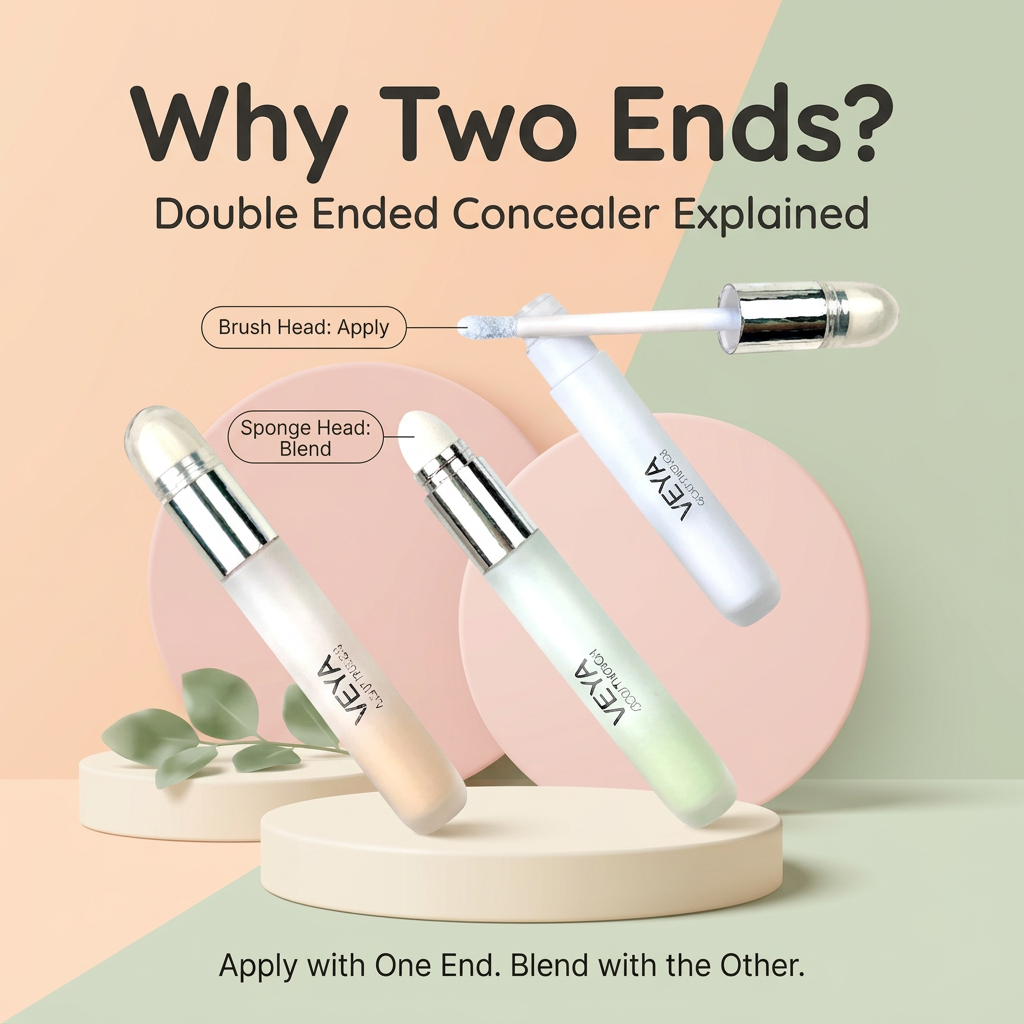
A Double Ended Concealer combines two ends in one case. Depending on the design, they may hold different shades, textures, or applicators. This keeps a makeup bag organized, and it helps with desk touch-ups or travel.
| Feature | Practical Benefit |
|---|---|
| Two shades | Targeted coverage for different areas |
| Two textures | Flexibility for different needs |
| Different applicator ends | Varied levels of precision |
| Compact case | Easy to carry for touch-ups |
| Cream-based formula | Controlled, layered application |
A double-ended product does not automatically include a corrector and a concealer. Read the shade descriptions to see what each end is intended to do.
If one end is a correcting shade, apply it to the discolored area and blend gently. Then apply the skin-tone end over it and tap the edges until the layers merge. If both ends are regular concealer shades, select the one that suits the area being covered.
A Concealer with Sponge has a sponge tip that places and spreads product with a tapping motion. It suits the under-eyes, the sides of the nose, and small blemishes. The result depends on sponge material, formula consistency, and pressure, so a light touch matters, particularly under the eyes.
The sponge collects makeup residue and skin oils, so hygiene matters. Follow the manufacturer's cleaning instructions, avoid sharing applicators, keep the cap closed, and replace the product according to packaging guidance. Stop using it if texture or smell changes. A sponge tip that cannot be detached should not be soaked.
| Tool | Suitable Areas | Style |
|---|---|---|
| Sponge applicator | Under-eyes, nose, small blemishes | Gentle tapping |
| Brush | Spot concealing, precise coverage | Controlled strokes |
| Fingertips | Small areas, cream formulas | Gentle pressing |
A brush gives control around a single blemish. Fingertips warm cream formulas, which helps them spread. The sponge tip is convenient when applying and blending need to happen in one step.
Suitable products can still look uneven when technique does not match the skin.
For dark circles, tap peach corrector onto the bluish area, apply a thin skin-tone layer, soften the edges with the sponge tip, and set lightly if the area creases. For redness, place a small amount of green corrector, blend the edges while keeping pigment in the center, then add matching concealer with a small sponge tip or brush. This works around the nose, chin, and individual blemishes.
During the day, oil, facial movement, and weather change the look of makeup. Blot excess oil before touching up, avoid layering fresh concealer over buildup, and check for creasing before adding powder. Dry skin benefits from added hydration before a touch-up.
Information on applicator styles and formula textures for Double Ended Concealer and Concealer with Sponge options is available from the brand's customer team, who can advise on shade selection and suitable pairings for different skin tones.
Your email address will not be published. Required fields are marked *
Nov 04,2026