


 English
 Español
 Deutsch
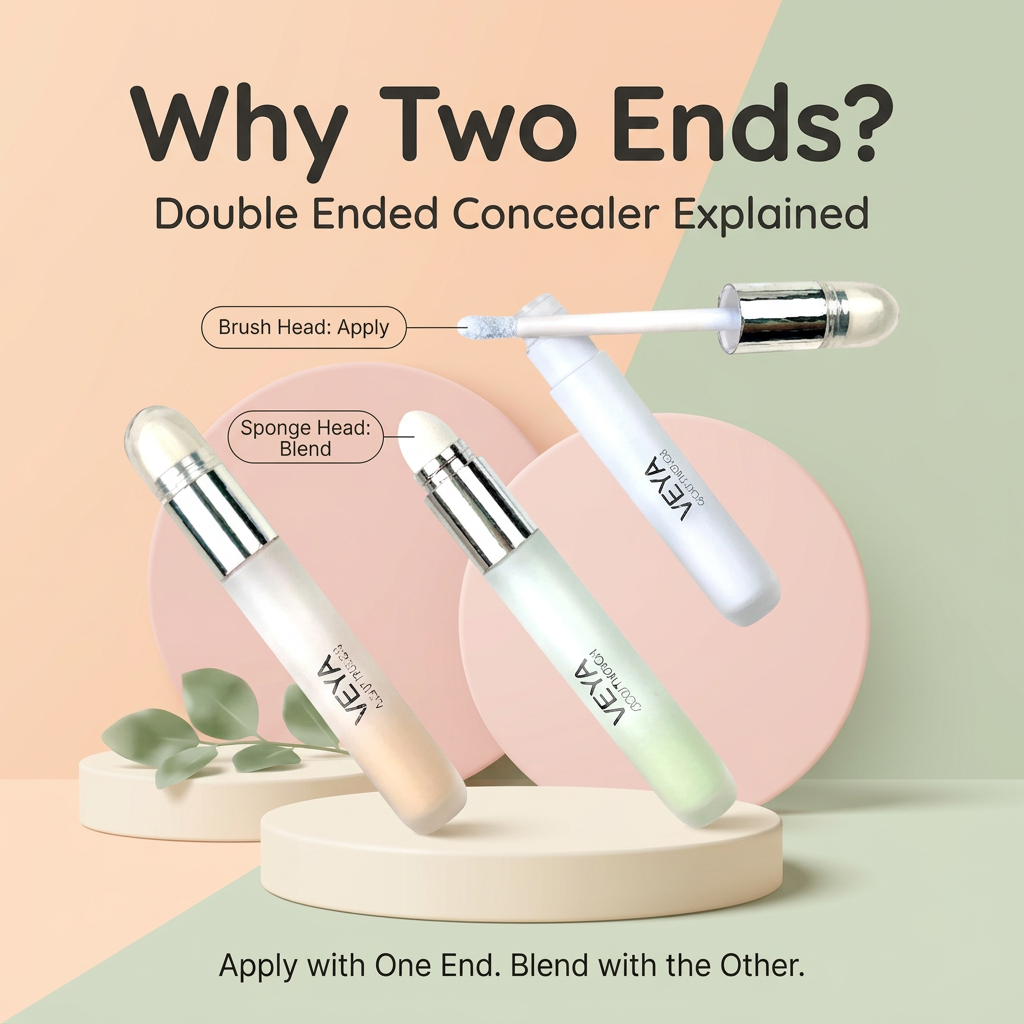
Makeup routines are shifting toward convenience, flexible application and a natural-looking finish, and the tool in your hand matters as much as the formula. A Double Ended Concealer puts two applicators in one package: a large brush head at one end and a sponge head at the other. You can apply and blend without digging through your makeup bag for extra tools. Knowing what each end does helps you get a smoother, more even result, whether you are covering a blemish before work or touching up before an evening out.
What a Double Ended Concealer Is
A Double Ended Concealer is a complexion product with two applicator ends built for different jobs. Rather than relying on a single brush or wand, it combines two tools that cover application, blending and touch-ups.
- Big brush head: distributes concealer and supports quick touch-ups.
- Sponge head: offers a soft surface for blending and refining the finish.
Applying makeup and blending it call for different techniques. A brush spreads product through sweeping motions, while a sponge presses it into the skin through gentle tapping. With both on one product, you move between stages without searching for another accessory, and you carry less in a bag or travel pouch. The design works best when each end has a distinct purpose instead of repeating the other. If both ends do the same thing, the second one is just decoration.
Why Two Different Ends Make Sense
There are four practical reasons behind the structure:
- Different contact patterns. A brush and a sponge touch the skin in different ways, so each suits a different stage of application.
- Flexible routines. You can pick the end that matches the area you are working on.
- Easy touch-ups. Both tools stay attached to the product, so nothing gets left behind or lost.
- Simpler storage. One item replaces two or three loose accessories.
In short, the idea is easy to remember: apply with one end, blend with the other.
What the Brush Head Does
A larger brush covers a broader area than a narrow precision wand, which suits small, targeted spots better. It is handy for:
- applying concealer across wider facial areas,
- distributing product during midday touch-ups,
- adjusting coverage to your preference,
- fitting into a daily routine without extra tools.
Size changes how the product meets the skin, and a wider surface may mean fewer passes over larger areas. Results still depend on bristle softness, formula consistency and the pressure you use. A soft, densely packed brush feels different from a sparse one, and a thicker formula will cling to the bristles differently than a lighter one. If a brush feels scratchy or drags, try a lighter touch or a little less product.
What the Sponge Head Does
Concealer that is not blended can look different from the surrounding skin. The sponge uses light tapping to diffuse edges and create a gradual transition between covered and uncovered areas. It is especially useful around:
- the under-eye area,
- the sides of the nose,
- patches of redness,
- small marks and uneven tone.
This is why a Concealer with Sponge appeals to so many people. It offers convenient application, gentle blending, easier touch-ups and less need for separate blending tools. The sponge’s firmness and shape affect how it feels in use. A sponge that is too firm can drag on delicate skin, while one that is too soft may absorb more product than expected. Tapping rather than rubbing keeps the product where you placed it.
Using the Two Ends Together
- Prepare the skin. Begin with clean, moisturized skin and let skincare settle before applying makeup. Products that are still wet can make concealer slide or streak.
- Apply with the brush. Spread a suitable amount over the areas that need coverage, working gently and avoiding extra layers.
- Blend with the sponge. Tap lightly to soften visible edges, and check the transition into the surrounding skin. Dragging the sponge can move product away from where it was placed.
- Adjust. Add a little product where more coverage is needed, then blend again until the result looks even.
Use each applicator for its own function, with its own pressure and movement. Brushing with the sponge or tapping with the brush defeats the purpose of having two ends.
Green and Skin-Tone Shades
Shade choice defines what a concealer can do.
| Shade | Purpose | Typical areas |
|---|---|---|
| Green | Visually balances red tones | Redness, blemish marks, flushed areas |
| Skin tone | Evens the look of the complexion | Dull or uneven areas, under-eye discoloration |
Green sits opposite red on the traditional color wheel, so a thin layer can visually reduce redness around the nose or on red marks. Too much leaves a color cast, so amount and blending matter, and the quantity should match the intensity of the redness and your skin tone.
Skin-tone concealer blends with the surrounding complexion to cover uneven areas. It is commonly used for under-eye discoloration, dull patches and the area around the mouth. Choose a shade that matches both your skin tone and undertone to avoid a visible line between concealed and bare skin.
A simple approach is to use green only where redness is clearly visible, then go over it lightly with a skin-tone shade so the area looks natural rather than corrected.
Why It Suits Everyday Routines
Most people want products that handle several tasks without a bag full of accessories.
- Integrated tools: two application surfaces in one package simplify applying and refining makeup.
- Touch-ups: brush and sponge allow adjustments during the day without a separate blender.
- Flexible technique: some people prefer brushing, others prefer tapping, and both are available.
- Travel-friendly size: a single compact item is easier to carry than a concealer plus separate tools.
A product like this fits busy mornings, commutes and quick fixes before an event, which is where convenience matters most.
What to Look for When Choosing One
Applicator design is only part of the product. Texture, skin feel, ingredients and packaging all shape the experience.
Applicator and Formula
A formula that spreads easily with a brush may behave differently on a sponge. A good product distributes evenly, releases a manageable amount per stroke and feels comfortable on the skin. A formula that is too thick may clump on bristles, while one that is too thin may soak into the sponge.
Ingredients
Ingredients such as niacinamide and botanical or marine-derived extracts appear in many complexion products, and emollients can influence skin feel and spreadability. Check the ingredient list if you have sensitive skin, and patch test a new product before regular use.
Packaging
A dual-ended package should have secure closures at both ends to keep the brush and sponge clean and protected in a bag. It should also let you reach each end easily.
Key Features to Check
| Feature | What to check |
|---|---|
| Brush head | Soft bristles, comfortable size |
| Sponge head | Gentle firmness, holds its shape |
| Formula texture | Spreads and blends with both ends |
| Shade range | Color-correcting and complexion options |
| Packaging | Secure closures, easy handling |
| Wear | Stays comfortable through the day |
Keeping the Applicators Clean
Because the brush and sponge touch your skin every time, regular care matters.
- Wipe the applicators gently after use and let them dry before capping.
- Replace the sponge if it crumbles, hardens or keeps a stubborn smell.
- Store the product capped and away from heat and moisture.
- Stop using any applicator that causes irritation, and consult a skincare professional if irritation persists.
Clean tools help the concealer go on smoothly and keep the finish looking even.
For Beauty Brands and Retailers
If you are developing or sourcing makeup products, a dual-ended concealer is a straightforward concept customers understand at a glance. Working with an OEM/ODM cosmetics manufacturer lets you shape the applicator structure, formula, shades and packaging around your market. A Concealer with Sponge can be built around the application experience you want to deliver, with testing of both ends before launch to confirm even pickup, comfortable blending and secure closures.
Explore Double Ended Concealer Options
Ready to find or create a concealer that applies and blends in one step? Browse Double Ended Concealer and Concealer with Sponge options to compare shades, textures and applicator designs. If you are building your own line, contact us to discuss OEM/ODM details, product specifications and sample options.