English
 Español
 Deutsch
Industry News

(86-579)8507 2566
Welcome to Zhejiang Weiya Cosmetics Co., Ltd.





Welcome to Zhejiang Weiya Cosmetics Co., Ltd.
Jun 19, 2026
A smooth facial tan can completely change the overall appearance of the skin, yet many people encounter the same frustrating outcome. The color develops unevenly, darker areas appear around the nose or jawline, and subtle streaks become visible under natural light. These issues often occur even when quality products are used. For users of Tanning Face Oil Drops, the challenge is rarely the product itself. More often, the final result is shaped by preparation, application habits, and the way the formula is blended into different areas of the face. Understanding those details can help transform an inconsistent finish into a more balanced and natural looking glow.
Facial tanning appears simple at first glance. A few drops are applied, blended into the skin, and left to develop. Yet the face is one of the more challenging areas to tan evenly.
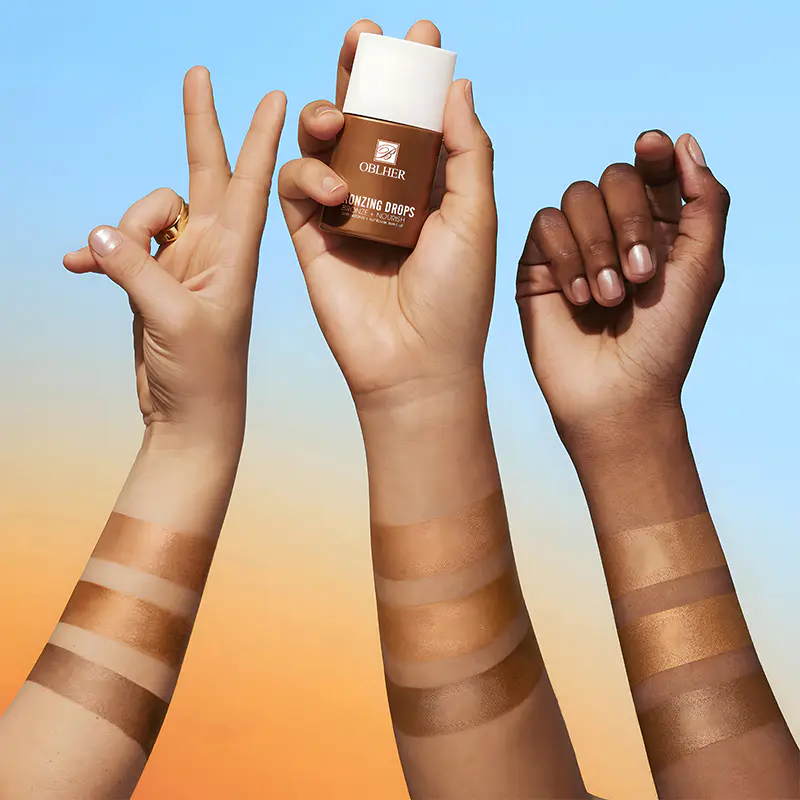
Unlike larger body areas, facial skin contains multiple contours, texture changes, and zones with different moisture levels. The forehead may feel smooth while the area around the nose remains dry. The cheeks might absorb skincare differently than the chin. These small differences often go unnoticed until the tanning result develops.
Many users assume streaks appear because they chose the wrong product. In reality, the explanation is often much less dramatic. Tiny inconsistencies during application tend to become more visible as the color develops.
One of the interesting things about facial tanning is that the problem does not always appear immediately.
Everything may look evenly blended at the time of application. Several hours later, however, darker patches start becoming visible around areas that were slightly drier than the surrounding skin.
The nose is a common example. Small dry sections near the nostrils often absorb more product than expected. Similar issues can occur around the eyebrows, hairline, and jawline.
Even people who maintain a consistent skincare routine experience subtle texture variations.
The face is exposed to changing environments every day. Moisture levels fluctuate. Some areas produce more oil while others become temporarily dehydrated. As a result, the same application technique may produce slightly different outcomes from one occasion to the next.
Recognizing this variability helps explain why successful facial tanning often requires adaptability rather than rigid routines.
Many discussions focus on formulas while giving little attention to the surface receiving them. The reality is that facial skin actively influences the final result.
A common misconception is that tanning products develop uniformly once applied.
Facial skin behaves differently. Certain areas absorb ingredients faster while others retain them closer to the surface for a longer period. These differences create subtle variations that can later appear as uneven color.
Because of this, application should be viewed as a process of balancing the face rather than simply covering it.
Think about a typical skincare routine. Moisturizers may be concentrated in drier areas. Serums might be applied more generously on certain sections of the face.
When tanning products are introduced on top of these layers, they interact with whatever is already present.
This is one reason why some people experience inconsistent results even though they follow the same tanning routine every time.
A slight inconsistency on the arm might go unnoticed.
On the face, however, small differences become visible much sooner. Natural light, indoor lighting, photographs, and mirrors all highlight areas where blending was incomplete. That visibility makes proper technique particularly important.
Preparation rarely receives as much attention as application, yet it plays a significant role in the final outcome. Many streak related issues begin before the product is even opened.
Residue from previous skincare products, excess oil, or leftover makeup can create uneven surfaces. mStarting with freshly cleansed skin reduces interference and allows the product to spread more predictably. This step may seem basic, but skipping it often contributes to patchiness later.
There is a noticeable difference between hydrated skin and heavily coated skin. The objective is not to create a thick layer of moisturizer. Instead, the goal is to minimize dramatic differences between dry and hydrated areas. When moisture levels feel relatively balanced, blending generally becomes easier.
Many people move directly from skincare application to facial tanning. Sometimes this works without issue. Other times it creates inconsistent distribution because certain areas remain more saturated than others. Allowing products to settle before application often creates a smoother surface.
It absolutely can. Where the product is placed initially often determines how easy blending becomes afterward.
A common habit is applying several drops directly onto one section of the face and then spreading them outward. This approach can work, but it often increases the likelihood of uneven distribution. Instead, many experienced users prefer spreading small amounts across several facial zones before blending begins.
The objective is not simply to cover the face. It is to distribute the formula evenly across different contours and transitions. Viewing application through this lens often produces a smoother outcome because attention naturally shifts toward balance rather than quantity.
Two people can use the same product and achieve noticeably different results. Blending is often the reason.
Rushing rarely improves facial tanning. Fast blending may leave product concentrated around facial edges where it is less noticeable initially but becomes visible later. Gentle circular motions generally provide more opportunity to distribute the formula evenly.
The jawline deserves more attention than many people realize. A slight difference between the face and neck can become surprisingly noticeable under daylight conditions. The same applies to the hairline and areas near the ears. These transition zones often determine whether the result looks natural or obviously uneven.
A few extra moments spent refining application can prevent much larger corrections afterward. Many users discover that slight adjustments made during blending eliminate the need for future touch ups.
A surprisingly common situation occurs after application appears complete. Everything looks evenly blended in the bathroom mirror. The color seems consistent and there are no obvious streaks. Later, natural daylight tells a different story.
A darker section appears near the jawline. A missed area becomes visible close to the hairline. What seemed invisible indoors suddenly becomes clear.
For this reason, many experienced users prefer performing a final visual check under natural lighting whenever possible. The difference can be significant.
There is no universal answer because different tools create different application styles.
| Application Method | General Characteristic | Common Preference |
|---|---|---|
| Fingers | Direct control | Everyday use |
| Brush | Precise placement | Detailed blending |
| Sponge | Soft diffusion | Gradual coverage |
Many users continue to prefer fingers because they provide a direct sense of how the product is moving across the skin. The ability to feel texture changes during application can be surprisingly useful.
Brushes often perform well around areas requiring greater control. Contours near the nose and jawline are examples where precision becomes beneficial.
Some users appreciate the way a sponge diffuses product. Rather than concentrating the formula in one location, it helps soften edges and create gradual transitions.
The assumption seems logical. If a small amount creates color, a larger amount should create a stronger result. Facial tanning rarely works that simply.
As product quantity increases, so does the possibility of uneven distribution. Small accumulations around facial contours become harder to notice during application and easier to notice later.
Many people who consistently achieve smooth results take a gradual approach. Instead of focusing on immediate intensity, they prioritize evenness. This allows adjustments to be made more comfortably and reduces the likelihood of concentrated areas.
An evenly developed result often appears more natural than one created through heavy application. Balance tends to draw less attention than uneven intensity.
Oil based formulas generally move across the skin differently than traditional lotions. This characteristic can help create smoother blending when application is controlled carefully.
Products such as Tanning Oil Face Drops are often incorporated into established skincare routines because they can be mixed with moisturizers or similar products. For many users, this flexibility makes application feel more manageable.
Regardless of format, preparation and blending continue to influence the final result. A carefully applied product often performs differently from one that is rushed through the process.
Applying on unbalanced skin — When some facial areas are significantly drier than others, development often becomes inconsistent.
Rushing through blending — Fast application saves a few moments initially but may create visible streaks later.
Ignoring facial edges — Hairlines and jawlines are easy to overlook. Unfortunately, they are also among the areas where streaks become noticeable.
Layering too aggressively — Applying multiple layers without allowing adequate time between them can create uneven color concentration.
Constantly touching the face — Repeated contact after application may disturb distribution and affect development.
Many people spend considerable time searching for different formulas when the real opportunity for improvement lies in technique. Small adjustments in preparation, hydration, placement, blending, and lighting awareness can change the final appearance more than expected. The process does not need to become complicated. In fact, the users who consistently achieve smooth results are often those who pay attention to subtle details rather than dramatic changes. A balanced approach, careful blending, and patience during development frequently contribute to a more even finish. For businesses exploring facial tanning solutions and product development opportunities, Zhejiang Weiya Cosmetics Co., Ltd. continues to focus on formulations designed to integrate naturally into modern skincare routines while supporting comfortable application and consistent user experiences.
Your email address will not be published. Required fields are marked *