English
 Español
 Deutsch
Industry News

(86-579)8507 2566
Welcome to Zhejiang Weiya Cosmetics Co., Ltd.





Welcome to Zhejiang Weiya Cosmetics Co., Ltd.
Oct 26, 2026
Lip balm packaging affects how a product is applied, carried, stored, and shown to customers. Jars and tubes can hold similar formulas, yet they feel quite different in daily use. The choice touches texture, dispensing, hygiene habits, and the way a brand arranges its range.
A jar has a wide opening, so users reach the balm with a fingertip or a small applicator. A tube has a narrow outlet or a twist-up base that brings the balm straight to the lips. Each format has real advantages, and neither suits every formula or every person.
For shoppers, knowing the difference makes picking easier. For cosmetic brands and packaging buyers, it links the container to formula behavior, intended use, and retail display.
The main difference is how users reach the formula. A jar has a removable lid and an open container below it, so the surface of the balm is visible once opened. A tube uses a narrower opening or a mechanism that moves the balm upward.
Soft balms, creamy textures, and small-batch handmade formulas are often easier to scoop than to push through a narrow outlet. Tubes focus on controlled dispensing, so the user can apply balm without touching what remains inside. That helps in a coat pocket on a cold morning commute.
| Design Feature | Lip Balm Jar | Lip Balm Tube |
|---|---|---|
| Opening | Wide | Narrow or controlled |
| Product access | Fingertip or applicator | Direct application |
| Texture fit | Suits creams and soft balms | Depends on formula and mechanism |
| Daily handling | Lid must be opened and closed | Quick swipe |
| Presentation | Formula visible when open | Outer package takes focus |
| Hygiene | Contact with the product needs care | Less contact with remaining balm |
A jar often feels like a skincare treatment, while a tube feels familiar to anyone who wants a fast swipe without using their fingers.
Some lip products hold a firm shape, while others are soft and spread easily. The package should give access without making the product awkward to use.
A broad opening lets users take a small amount of a rich, oil-based balm and spread it across dry lips. Small-batch makers often favor jars for scented or colored balms, since customers can reach the formula directly. The container material and lid still need to suit the ingredients, because a wide mouth alone does not make a jar suitable.
Tubes can hold many formulas too, but the product must work with the mechanism. A very firm balm may resist release, while a very soft one may not stay where it should. Testing the formula in the actual container during development catches these problems early.
Convenience depends on where and when someone applies balm. A commuter reapplying several times a day wants minimal handling, while a person at home before bed may enjoy a slower routine.
| User Situation | Jar Consideration | Tube Consideration |
|---|---|---|
| Home routine | Direct access to the formula | Convenient for regular use |
| Travel | Needs a secure lid | Suits quick use on the go |
| Outdoor activity | A clean applicator helps | Direct application cuts handling |
| Rich formula | Wide opening simplifies access | Formula must suit the dispenser |
| Shared use | Needs careful hygiene | Less contact with remaining balm |
Tubes slip easily into a pocket or handbag. Jars give users control over how much they take, though they add a step: open the lid, use a clean fingertip, and close it again.
Lip products are used close to the mouth, so handling matters. With a jar, fingers touch the balm directly, and repeated contact can carry dirt into the remaining formula. A clean applicator and a firmly closed lid support good habits.
Tubes limit contact with the remaining balm, but the exposed tip still meets lips and other surfaces. Replacing the cap and keeping the opening clean helps. Neither format guarantees protection on its own, since stability also depends on the formula, container material, closure fit, and storage conditions like a hot car or a damp bathroom shelf.
Brands should check packaging compatibility during development and print clear storage and handling instructions for customers.
Packaging tells a story before anyone tries the product. Shape, finish, color, labeling, and closure all shape how a balm looks on a shelf or in an online photo.
A jar offers a broad surface and lets customers see the texture when opened. That suits gift sets, handmade collections, and ranges built around different scents. Tubes offer a long printable surface and a format customers already recognize.
Formula and use case should guide the decision rather than looks alone. For B2B buyers, suppliers also need to confirm material compatibility, decoration methods, closure fit, filling requirements, and how finished containers are packed and shipped.
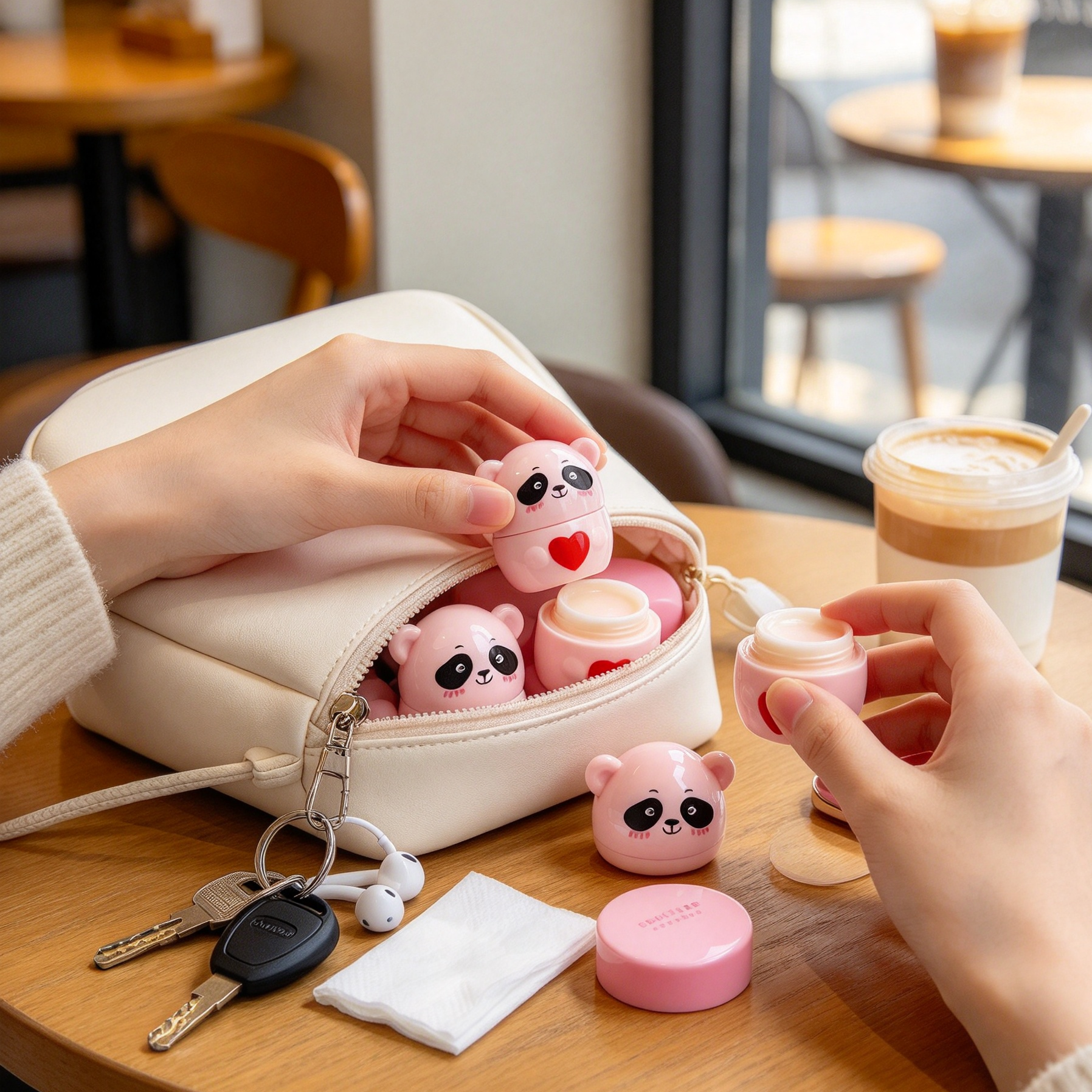
A small balm is made for easy storage in a handbag, desk drawer, or travel pouch. A small jar works when the product is meant for fingertip use, even with a soft or creamy formula. It also fits neatly into gift sets and skincare kits.
A compact tube is practical when portability and direct application matter most. It can be used on a train platform without scooping anything out. Size alone should not decide the choice, since a thick formula can be hard to reach through a tiny opening, and a small jar may frustrate someone who dislikes touching the product.
Start with the intended texture. Soft, scoopable balms tend to suit jars, while products meant for direct application suit tubes. Then check the formula against the container material and closure.
Packaging teams can review these areas:
Testing the filled package reveals issues a blank sample can hide, such as formula changes after storage or a loose closure after repeated handling. Both jars and tubes earn a place in a cosmetic range when the packaging fits the formula, the application method, and the customer's daily routine.
Your email address will not be published. Required fields are marked *

Oct 26,2026