English
 Español
 Deutsch
Industry News

(86-579)8507 2566
Welcome to Zhejiang Weiya Cosmetics Co., Ltd.





Welcome to Zhejiang Weiya Cosmetics Co., Ltd.
Nov 26, 2026
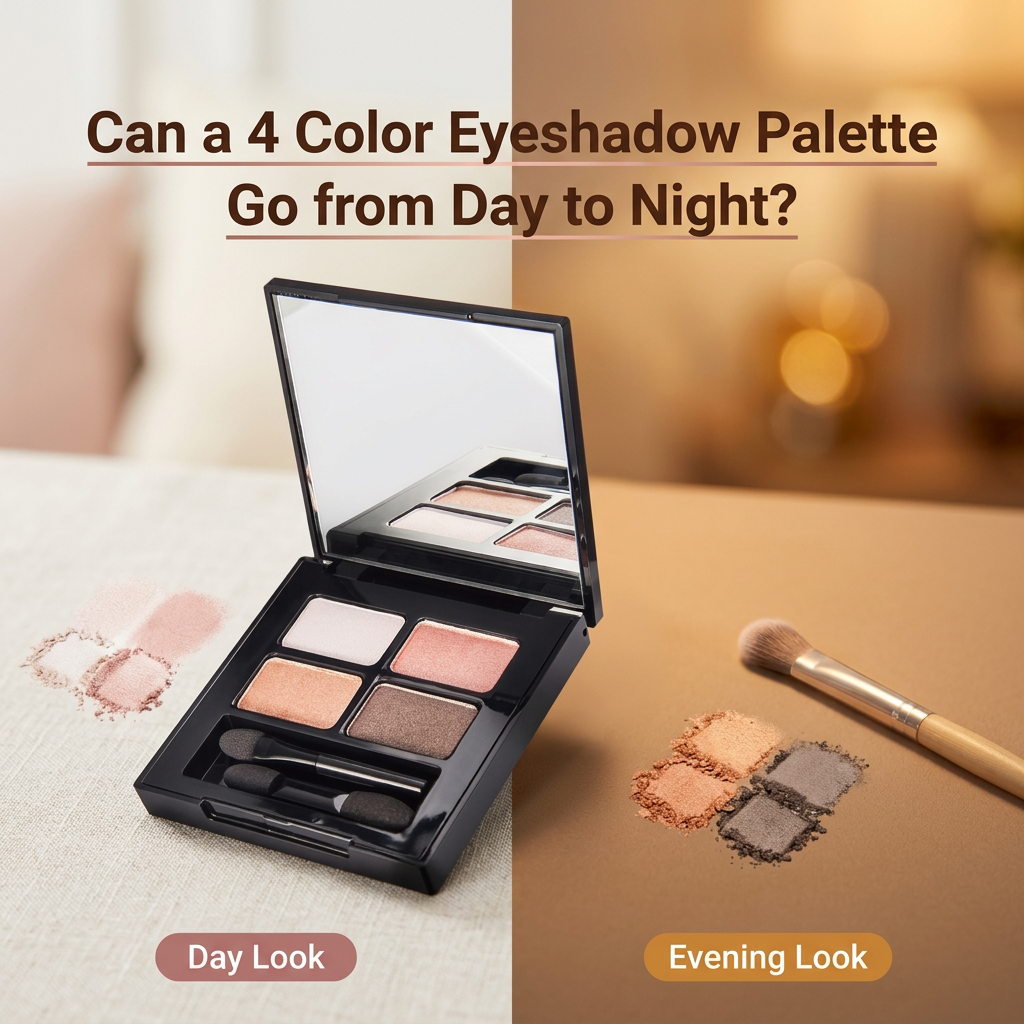
A workday rarely leaves time to rebuild eye makeup before dinner. A neutral look suits the office or a casual outing, and a more defined style suits an evening event. Starting over means removing product and reaching for several separate items. Makeup Eye Palettes with coordinated shades reduce that effort, because the transition color, crease color, and lid highlight already belong to one scheme. A 4 Color Eyeshadow Palette suits this approach well, since each shade can take on more than one role. A quick change does not mean a rushed one. It means choosing the areas that alter the look most, adjusting intensity, and working over the existing makeup instead of removing it.
Coordinated shades stored together remove the guesswork of matching colors from separate products. A light shade gives a base, a medium one adds definition, a deeper one adds contrast, and a reflective one brightens the lid. These roles shift with the occasion.
Shades with compatible undertones also keep a look consistent. Deepening the outer corner or moving attention to the lid does not require replacing every color, so the makeup stays connected from morning to evening.
A compact palette fits in a handbag, makeup bag, or travel case. Store it with a secure closure so the pressed powder does not crack. Usefulness depends on how many ways the colors can be applied, not on how many pans the case holds. A small group of shades that blend well often supports more looks than a large collection that clashes.
Daytime makeup usually has a neutral lid, a soft transition around the crease, and a lighter outer corner. For the evening, small additions can change the effect while keeping the original colors in place.
Before adding anything, check whether the earlier makeup has creased or turned uneven. Soften those spots with a clean brush instead of layering pigment over them. New color then sits more evenly.
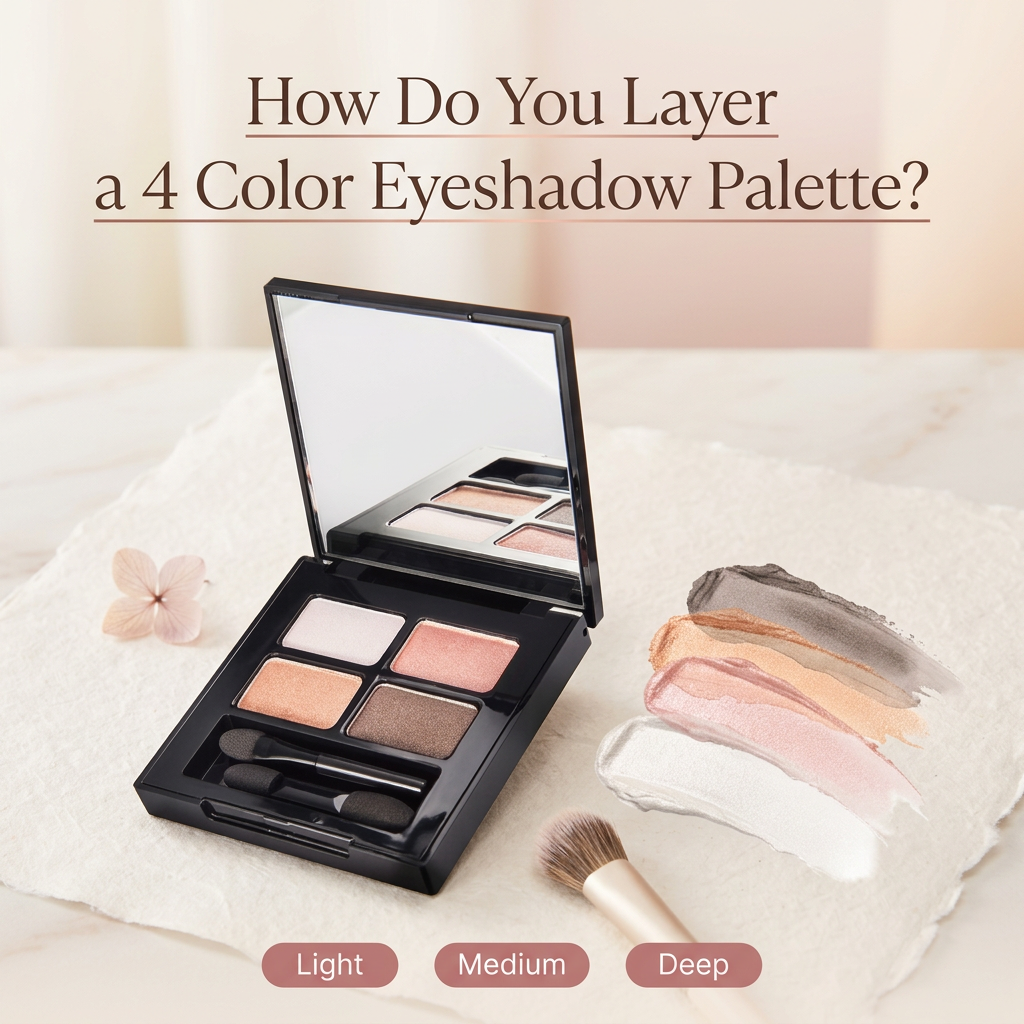
A 4 Color Eyeshadow Palette stays flexible when placement, coverage, and intensity change instead of the colors. A typical set holds a light shade, a medium transition, a deeper shade, and a reflective or detail color. These roles are a starting point.
The lightest shade can cover the lid for a natural look, or soften a dark edge during adjustments. The medium shade defines the crease and can also serve as the main lid color when spread wider. The deeper shade creates contrast near the outer corner, along the lash line, or inside the crease. The fourth shade sets the mood, adding brightness if reflective or depth if matte.
| Style | Shade Arrangement | Effect |
|---|---|---|
| Natural | Light base with soft transition | Gentle definition |
| Soft daytime | Medium shade on lid, light outer shading | A little more color |
| Defined evening | Deeper outer corner, stronger crease | Noticeable depth |
| Bright accent | Reflective shade on lid center | Added brightness |
| Soft smoky | Medium and deep shades near lash line | Gradual intensity |
The same four colors produce all of these looks through position alone, which suits anyone who wants variety without carrying many products.
Changing every part of the eye is unnecessary. A few visible areas shift the whole appearance.
For a fast refresh, follow this order:
Working this way avoids extra layers and keeps the result easy to control.
A change of finish alters the look even when the color family stays the same.
Matte shades give depth around the crease and outer corner without drawing attention to surface shine. A matte transition shade gives soft definition by day, and a deeper matte near the outer corner or lash line suits the evening.
Shimmer shades reflect light and make selected areas stand out. On the lid center they contrast with matte color around the crease. A small amount often refreshes existing makeup, so the whole lid does not need recovering.
Satin shades have a soft sheen between matte and shimmer. They add some brightness without strong sparkle.
Matte shades usually set the shape, and reflective ones highlight chosen areas. Keeping textures in separate zones maintains balance.
Occasions call for different levels of definition.
The aim is to fit the setting, not to follow a fixed routine.
Some habits undermine fast adjustments.
A palette for frequent use should match regular makeup habits. Coordinated undertones make shades easier to combine in a hurry, and a spread of light, medium, and deeper colors gives more flexibility than shades of similar depth.
Finish range matters. Matte and reflective options support both understated and defined looks, though someone who rarely wears shimmer may prefer matte and satin shades. Eyeshadow that distributes evenly saves repeated corrections, and the result also depends on lid condition, brush choice, and the amount of product used.
Packaging affects everyday handling. A secure case protects the powder in transit, a compact shape fits a handbag or travel pouch, and visible shades speed up selection. A 4 Color Eyeshadow Palette suits people who want a simple collection with several uses. Its value lies in how easily the shades adapt to different looks, not in the count of colors.
Your email address will not be published. Required fields are marked *